

Environmental
Management

The Company has implemented the Environmental Management System based on the ISO 14001:2015 standard, ensuring compliance with applicable environmental requirements, control of significant environmental risks and aspects, management of the footprint generated by the telecommunications network deployment processes, etc., all under a rigorous standard with clearly defined objectives and goals that have been monitored throughout these 16 years, thus achieving continuous improvement of the Company’s environmental management.
Telefónica Movistar Colombia’s Environmental Management System has five Environmental Programs, designed under two approaches, the first one associated to the mitigation of environmental impacts, and the second one to the prevention of fines and sanctions. The axes are: resource management, energy and climate change, circular economy, attention to legal requirements and continuous environmental improvement.
The Company adapts to global trends and is a leader in the waste management sector, aligned with the circular economy strategy not only on a national scale but also worldwide, and promotes responsible environmental management among its allies and contractors in order to reduce their impact.
Each year, the evaluation of environmental aspects and impacts is carried out by analyzing the business life cycle and the interaction with the Company’s administrative, technical and commercial processes or activities at the national level. At the end of 2024, impacts associated with gasoline consumption in the vehicle fleet, generation of hazardous waste and generation of waste from electrical appliances have been identified.
Different control and follow-up measures have been established, such as working groups with critical allies for the environmental management system, on significant environmental aspects and indicators of circular economy and climate change, and on environmental legal compliance and timely reporting to environmental authorities at the national level. In addition to this, the implementation of different environmental and energy efficiency projects. Telefónica has a corporate environmental policy that establishes the environmental guidelines and commitments for all the group’s operators.
This policy is based on:
- Risk management and environmental compliance.
- Setting ambitious environmental targets for continuous improvement.
- Improvement of internal eco-efficiency.
- Promotion of digital solutions to help customers address the major environmental challenges affecting society as a whole.
- Involving suppliers and partners in the Company’s environmental commitments.
The environmental policy is available to all stakeholders in digital and physical media at the national level in the centers of expertise and the web portal.
Similarly, the Company has an Energy Management Policy, defined within the framework of the Telefónica Group’s Environmental Policy, and develops the principles of environmental management in the energy field. This Policy aims to provide a common frame of reference for the establishment of objectives and the undertaking of actions based on Telefónica’s commitment to efficiently consume energy and reduce its greenhouse gas emissions, in order to move towards a Company with zero net carbon emissions.
In addition, the Supply Chain Sustainability Policy establishes obligations to comply with best environmental practices.

Management of
Environmental Programs
Telefónica has focused its management on the preservation of the environment and the reduction of CO2 emissions, and has therefore defined clear goals to reduce emissions, in line with the development of products and services and the growth and expansion of the network.
The climate action plan frames the quantification of greenhouse gases (GHG) emissions and defines the objectives and actions to achieve them for the Company’s different activities.
Every year, energy consumption (electricity, fuels, refrigerant gases, etc.) is reported and quantified and the carbon footprint is calculated and verified by an external entity, which in 2024 was AENOR.
Likewise, the data associated with the Company’s environmental management is consolidated and reported in order to follow up on the effectiveness of the actions taken to prevent the environmental impact of its operations.
In relation to the Circular Economy, the Company has goals for the use of hazardous waste and electrical and electronic equipment to offer recovered or used raw materials to other productive sectors in the country, such as aluminum, copper, iron, oils, lead contained in batteries, paper and cardboard, among others.
With regard to the management of waste electrical and electronic equipment, the Company receives unused cell phones and accessories in all its experience centers nationwide, thus seeking to recover the components and minimize environmental impacts. Likewise, the process of returning modems and decos by customers helps to reincorporate this equipment in the operation, minimizing the use of materials for the manufacture of new equipment and reducing the waste generated by the services delivered to the customer’s premises.
Eco Rating
In 2024, Movistar continued to promote Eco Rating, updating its label to facilitate understanding of the environmental impact of mobile devices. This tool assigns a score from 1 to 100, where a higher mark reflects a higher level of sustainability and respect for the environment.
The label also highlights five key aspects:
- Durability: useful life of the device.
- Repairability: ease of repair and prolonged use.
- Recyclability: recovery of materials at the end of their life cycle.
- Climate efficiency: reduction of carbon emissions.
- Efficiency in the use of resources: optimization of materials and energy.

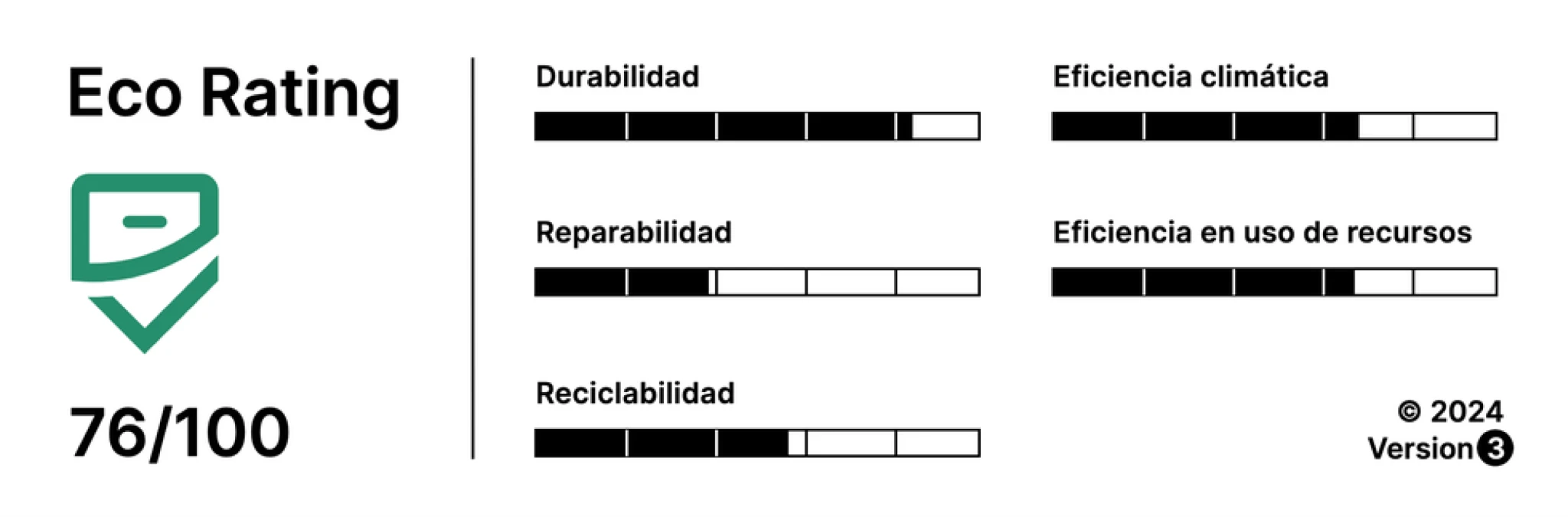

With this initiative, Eco Rating helps consumers to make responsible decisions, encouraging more conscious and sustainable consumption.
To increase its reach, work is underway to evaluate a greater number of devices and to improve the visibility of the seal in the Movistar Online Cellular Store, where the catalog is periodically updated. More information is available at Eco Rating Movistar.
Climate
Change
Climate change has a profound influence on the Company’s global business strategy, due to both its direct impact and the risks and opportunities it generates. The energy and climate change strategy is designed to drive long-term value creation through effective risk management and the exploitation of new opportunities.
Telefónica has established specific targets and indicators for its operation, aligning its efforts with the level of decarbonization needed to keep global warming below 1.5 °C, in line with the Science Based Targets (SBTi) initiative. These indicators, monitored on a quarterly basis, include the emissions inventory, carbon footprint, electricity and fuel consumption, as well as the progress of ongoing projects.
In addition, the analysis of risks associated with climate change is carried out under Telefónica’s risk assessment methodology, prioritizing those with the greatest significant impact. The actions implemented allow us to effectively mitigate and control these risks, reinforcing the Company’s commitment to sustainability and the transition to a cleaner future.
Climate Change Risks
and Opportunities
To determine the financial implications, risks and opportunities derived from climate change in the operation of Telefónica Movistar Colombia, a specific methodology has been developed taking into account two fundamental axes, physical and transition risks, as well as the climate sphere, impact of the risk, economic range and probability of occurrence.
After analyzing the risks associated with climate change before establishing the necessary measures to minimize or control them (BaU Scenario) and taking 2050 as the time horizon, the following conclusions were reached:
- Significant monetary impact:
The Net Zero 2050 scenario presents transition risks with a considerable monetary impact for Telefónica Movistar Colombia, reaching almost COP 40 billion in 2050.
- Outstanding market risk:
There is a market risk of OPEX expense due to the increase in the price of electricity, which has the greatest impact, reaching almost COP 24 billion in 2050, with a 90.5% probability of occurrence.
- Reputational risk:
although of lesser impact, the risk of offsetting emissions through the purchase of carbon credits stands out.
Based on the analysis of each risk, opportunities have also been identified:
Energy sources and PPAs opportunity
Although representing a minor monetary impact, the implementation of projects to improve energy efficiency, self-generation of energy and the use of cleaner sources represents a significant opportunity to reduce costs and improve operational efficiency. Improving energy efficiency involves optimizing the use of existing energy resources, leading to a decrease in operating costs associated with electricity, heating and cooling. This not only has a positive impact on the financial bottom line, but also contributes to the long-term sustainability of the Company.
Opportunity to increase business derived from the fight against climate change
This is identified as the greatest opportunity, with economic benefits derived from IoT and Cloud services, particularly Eco Smart products. The benefits could exceed COP 400 billion, standing out as the main opportunity for Telefónica Movistar Colombia in the transition scenario towards an emission-free economy.
In summary the Net Zero 2050 scenario poses Telefónica Movistar with considerable financial challenges, but simultaneously opens doors to significant opportunities for sustainable economic growth. Rapid alignment with new technologies and business models focused on combating climate change emerges as a strategic opportunity.
Energy
GRI Content 302-1, 302-3, 302-4, 302-5
Telefónica has a global corporate energy and climate change strategy, with quantitative targets that are not only compatible with network expansion and service quality, but will also help to be more competitive.
Responsible energy consumption is one of the greatest opportunities to generate savings and efficiencies for the Company, through the implementation of energy efficiency projects, self-generation and consumption of alternative and cleaner energies.
In 2024, total energy consumption was 284,394 MWh, or 7 % less than in 2023.

| 2023 | 2024 | |
|---|---|---|
| Total Fuel Consumption (MWh) | 13,869 | 10,745 |
| Total Electricity Consumption (MWh) + Self-Generation | 292,609 | 273,649 |
| Total Energy Consumption (MWh) | 306,478 | 284,394 |
In 2024, the operation’s total electricity consumption, including third-party sites, reached 273,649 MWh. Of this total, 271,748 MWh corresponded to energy supplied by the national distribution network and 1,901 MWh were self-generated through photovoltaic systems implemented in the second phase of the PPA On Site Project. Total electricity consumption at the company’s own facilities was 252,066 MWh.
Thanks to our commitment to energy efficiency and responsible consumption, nearly 233,771 MWh of total consumption came from renewable sources, representing 92.7% of the electrical energy used in our own facilities and 85.4% of total electricity consumption.
The distribution of the Company’s electricity consumption was as follows: 89% was for technical site management, 6% for datacenters, 4% for commercial use and 1% for offices.
Fuel is another source of energy used and serves as a backup when the electric power supply is interrupted or not provided. In 2024, consumption was 931 thousand liters of gas oil/diesel, a 22% reduction compared to 2023, equivalent to more than 266,840 liters. This was provided thanks to the implementation of equipment with greater efficiency and to the gas oil/diesel consumption controls from partners and suppliers in the supply to the network nationwide.
Total fuel consumption gas oil/diesel (liters)
| 2023 | 2024 |
|---|---|
| 1,198,616 | 931,776 |
The Company has also made great efforts to reduce fuel consumption in the vehicle fleet, increasingly using fuel-efficient vehicles and improving fleet management through the use of M2M solutions. Consumption decreased by 24 % compared to 2023.
Fuel consumption in vehicles (liters)
| 2021 | 2022 | 2023 | 2024 |
|---|---|---|---|
| 165,258 | 209,700 | 199,833 | 151,227 |
Energy Intensity

Emissions
Based on an annual analysis of energy consumption, the calculation of the carbon footprint of all Telefónica Group operations is performed according to the GHG Protocol methodology applied to scopes 1 and 2. To calculate the indicator, the 1.5 ºC scenario of the Paris Agreement was used as a baseline calculation and the result of 2015 consumptionfor different aspects such as energy, fuels and refrigerant gases, among others. The gases included in the calculation are CO2, CH4, N2O, HFC.
To make the calculation, the emission factors established for Colombia by the Mining-Energy Planning Unit UPME year by year have been taken as a reference. For the year 2024, the CO2 emission factor for electricity for Colombia is 112 g CO2eq/ KWh.
The Company carries out an independent verification process of energy and emissions data, in order to obtain quality information about the energy consumed by the Company and the greenhouse gases emitted into the atmosphere in its activities. This has made it possible to identify process improvements and manage energy and carbon in a transparent manner.

Similarly, based on this quantification and verification, compliance with global energy and climate change objectives is evaluated.
In 2024, scopes 1 and 2 emissions totaled 14,872 tons. Thanks to the implementation of an ambitious energy efficiency program, the Company has reduced carbon emissions by 73 % since 2015–the year from which the carbon footprint inventory began to be calculated and the climate action commitments were established–that is, it has reduced the emission of 39,488 tons of CO2.
Similarly, the Company continues to promote the model of electricity consumption from renewable sources, which in 2024 reached 92.7 % of consumption at its own sites; and 85.4 % of the total electricity consumption of the entire operation, including third-party sites, which helped us to avoid more than 26,182 t CO2.
This is the evolution of annual scopes 1 and 2 emissions:
| 2015 | 2016 | 2017 | 2018 | 2019 | 2020 | 2021 | 2022 | 2023 | 2024 | |
|---|---|---|---|---|---|---|---|---|---|---|
| CO2 direct emissions (scope 1) | 18,897 | 17,534 | 16,814 | 15,025 | 12,036 | 12,689 | 14,101 | 11,040 | 10,141 | 10,406 |
| CO2 indirect emissions (scope 2) | 35,463 | 36,436 | 36,153 | 35,499 | 18,530 | 15,314 | 20,971 | 6,846 | 5,558 | 4,466 |
| Total CO2 – tons | 54,360 | 53,970 | 52,967 | 50,524 | 30,566 | 28,003 | 35,072 | 17,886 | 15,699 | 14,872 |
Water
The Company has an efficient resource management program that seeks to control leaks, consumption and good saving practices, as well as to promote a culture of efficient use of the resource; in any case, water consumption is not significant or material for the Company’s operations.

In 2024, water consumption at the national level was of 163,167 cubic meters, for domestic use, and comes directly from the municipal aqueduct system.
There was a 3 % increase in water consumption in the Company with respect to 2023. This increase is due to being back in the office, going from two to three days. However, actions such as early detection and control of leaks, cancellation of accounts, as well as the participation of employees in environmental awareness campaigns are maintained. Water consumption has not been determined for water-stressed areas in Colombia.
Water consumption (m3)
Water consumption at operational, administrative and commercial sites
| 158,378 | 163,167 |
|---|---|
| 2023 | 2024 |

The measurement of water consumption comes directly from the invoices of the water companies that have a measurement system through meters at each of Telefónica Movistar Colombia’s sites nationwide; in this case, 6% of total consumption is estimated since the invoicing is in the process of being generated by the public utilities company. Likewise, the water consumption of third party companies located in the facilities is discounted.
Waste
Management
Telecommunications networks require preventive and corrective maintenance, which generates urban waste, special handling waste (WEEE – debris) and hazardous waste due to the use of different supplies such as filters, batteries, oils, refrigerant gases, paints, lighting, spare parts, fiber, electrical and electronic equipment, among others. Different operational controls have been defined for these activities and waste is managed in accordance with applicable environmental regulations.
In 2024, 11,398 tons of waste were managed, mostly from the operation and maintenance of the grid, electricity backup systems and works for the deployment of infrastructure. 99.6 % of the waste is non-hazardous and 0.4 % is hazardous and, due to its characteristics, is not reincorporated in the operation, but is used as raw material for other production processes.
| Type of Waste | Residue | Unit | 2023 | 2024 |
|---|---|---|---|---|
Non-Hazardous  | Paper and Cardboard | Tons | 83 | 67 |
| Cables, Plastic Pipes, and Metals | Tons | 4,546 | 10,281 | |
| WEEE Operations and Offices | Tons | 108 | 64.7 | |
| Customer Mobile Phones | Tons | 5 | 2.5 | |
| Customer WEEE (except Mobile Phones) | Tons | 82 | 39.8 | |
| Other Non-Hazardous Waste (Demolition and Construction) | Tons | 840 | 891.8 | |
Hazardous  | Fluorescents | Tons | 1 | 0.7 |
| Batteries | Tons | 15 | 25.4 | |
| Other Hazardous Waste | Tons | 8 | 9.3 | |
| Used Oils | Tons | 12 | 13.6 | |
| Refrigerant Gases and Their Equipment | Tons | 16 | 1.6 | |
| WEEE Operations and Offices (CRT Screens, PCB, With Oils) | Tons | 0 | 0.3 | |
| Total (Tons) | 5,717 | 11,398 |

The Company relies on specialized and duly authorized partners to properly manage, handle, transport and dispose of hazardous and special handling waste. Waste is not managed within the Company’s facilities; it is treated through these authorized managers in their own plants.
Specialized working groups have been defined to perform monthly monitoring of the generation and proper disposal of waste by the allies, taking into account the type generated, the proper disposal, the managers used and the type of treatment, always guaranteeing that such management is within the framework of the regulations and the implementation of appropriate operational controls. This ensures control and traceability of information on the whole process, from generation to final disposal.
The Company uses the GreTel tool to control the data of the waste generated at a national level, which allows uploading the information for each of the waste groups defined and generated in the organization. In turn, this platform receives the uploading of the information of the waste managed by the allies or different areas of the Company. Regarding hazardous waste, Telefónica Movistar Colombia guarantees the respective annual report to the competent environmental authority.
Circular Economy
Promotion
The Company has established different waste circularity mechanisms, such as the reuse of modems and decos returned by customers, which means that they are no longer waste electrical and electronic equipment and are reintroduced into the life cycle of the broadband service. In 2024, 520,163 pieces of equipment were reused thanks to this mechanism, equivalent to 235 tons.
At the same time, preventive and corrective maintenance has been optimized in the Company, reducing the frequency of such maintenance and its waste, purchasing more efficient, maintenance-free equipment with a longer useful life. The Company has a specialized manager for handling waste electrical and electronic equipment so that the majority of electronic components can be recovered and used for other production processes outside the organization.
Another of the circularity measures implemented by the Company is the re-deployment of scrap copper at the national level, which allows its use in different production processes, reducing environmental liabilities and generating non-operating income from its sale. By the end of 2024, 9,868 tons had been re-deployed.
These initiatives led to 99.7 % of the waste being recycled in 2024, while 0.7 % was treated in other ways, such as landfills and incineration and deposited in safety cells, when there are limitations of access to the area or due to the characteristics of the waste:
| Final Provision | |||||
|---|---|---|---|---|---|
| Type of Waste | Waste | Recycling | Landfill and Incineration | Other, e.g. Cells | Grand Total |
| Not Hazardous | Paper and Cardboard | 66.9 | 0 | 0 | 66.9 |
| Cables, Plastic Pipes, and Metals | 10,281.2 | 0 | 0 | 10,281.2 | |
| WEEE Operations and Offices | 64.7 | 0 | 0 | 64.7 | |
| Customer Mobile Phones | 2.5 | 0 | – | 2.5 | |
| WEEE Customers (except Mobile Phones) | 39.8 | 0 | 0 | 39.8 | |
| Other Non-Hazardous Waste (Demolition/Construction) | 869.0 | 15.9 | 6.9 | 891.8 | |
| Total Not Hazardous | 11,324.1 | 15.9 | 6.9 | 11,346.9 | |
| Dangerous | Fluorescents | 0.5 | 0 | 0.2 | 0.7 |
| Batteries | 25.4 | 0.1 | – | 25.4 | |
| Other Hazardous Wastes | 0.8 | 1.4 | 7.1 | 9.3 | |
| Used Oils | 11.7 | 2 | 1.9 | 13.6 | |
| Refrigerant Gases and Their Equipment | 1.6 | 0 | – | 1.6 | |
| WEEE Operations and Offices (CRT Screens, PCB, With Oils) | 0.3 | 0 | – | 0.3 | |
| Total Dangerous | 40.3 | 1.4 | 9.2 | 51.0 | |
| Grand Total | 11,364.4 | 17.4 | 16.1 | 11,398 | |
| % Total Type of Treatment | 99.7 | 0.2 | 0.1 | 100 | |

Although waste management depends on the authorization generated in the environmental licenses of the managers that support it, the Company has a waste management priority chain, where the first treatment must be focused on its reuse, recycling or exploitation.
Commitment
to Biodiversity
Telefónica Movistar Colombia has aligned its actions with the Global Biodiversity Framework, promoting projects that not only foster environmental conservation, but also minimize the environmental impact of its operations.
In the conservation area, the Company has developed specific plans for protected areas. In the Sumapaz National Natural Park, 146 native trees were planted along 145 linear meters, while in the Galeras Flora and Fauna Sanctuary, 583.33 m² were restored with the planting of 442 plants of 18 species. Telefónica Movistar Colombia also installed information billboards in the Tatamá National Park to protect wildlife and organized awareness-raising workshops in Nariño on ecological restoration.
In terms of pollution reduction, Telefónica Movistar Colombia has achieved a 73 % reduction in CO2 emissions (scopes 1 and 2) since 2015, equivalent to more than 39,000 tons of CO2 avoided. In addition, its Integrated Waste Management Plan has enabled the recycling of 99.7 % of more than 11,000 tons managed, consolidating a commitment to circular economy and efficient waste management.
As part of its strategy to combat climate change, Telefónica Movistar Colombia has migrated 92 % of its electricity consumption to renewable sources, and has implemented photovoltaic self-generation systems that produce 1.9 GWh annually. The company has also made progress in shutting down 2G and 3G networks, prioritizing 4G and 5G technologies, which are up to 90 % more energy efficient.
In the area of responsible consumption, 38 % of its digital business portfolio has the Eco Smart seal, promoting energy savings and sustainability. It has also promoted the use of Eco Rating, a tool that evaluates the sustainability of mobile devices, helping consumers to make more responsible choices.
Finally, in its commitment to transparency, Telefónica Movistar Colombia annually publishes its Responsible Management Report under international standards such as GRI, TCFD and SASB. It is also actively involved in global initiatives, participating in TNFD (Taskforce on Nature-Related Financial Disclosures) and 1 Trillion Trees, reaffirming its role in global sustainability.

Telefónica Movistar at COP16: Commitment to Connectivity and Biodiversity
Durante la COP16, celebrada en Cali, Colombia, Telefónica During COP16, held in Cali, Colombia, Telefónica Movistar played a prominent role by participating in various spaces, for example in the Congress of the Business and Productive Sector of Colombia, organized by the National Business Council and ANDI. Represented by Asomóvil, Telefónica Movistar presented its strategies to mitigate environmental impacts and promote sustainability.
To ensure optimal connectivity during the event, it strengthened its 4G and 5G network at key points in Cali, such as the Bulevar del Río, the Valle del Pacífico Events Center, the airport and the hotel zone.
In order to facilitate attendees’ connection, it also deployed its sales force in key locations, offering free SIM cards and the COP16 Prepaid PRO plan, which included data, minutes and SMS at no cost.
Sustainable
Mobility
Telefónica Movistar Colombia reaffirmed its commitment to sustainability and the well-being of its employees, working on various fronts to achieve the goals set for sustainable mobility. Some of the most outstanding achievements of the year are:
Expansion of the carpooling program, which incorporated more than 2,600 employees, generating 205,378 route publications and 20,802 effective connections, benefiting 695 women with a safe travel.
Success of the bicycle and scooter sharing programn with the participation of more than 720 users, who made 34 thousand trips and traveled 443 thousand kilometers, reducing 110 tons of CO2 and adding 568 days of wellbeing thanks to the reduction of traffic.
Free bicycle and skateboard maintenance workshops were organized in Bogotá, benefiting more than 450 employees. In addition, physical activity was promoted through stationary bicycles and an interactive electric track, with the participation of 112 employees.
Improvements in the shared mobility stations, which included the incorporation of 6 electric assisted bicycles and the adaptation of areas for the loan of 7 bicycles and 16 free scooters.
Promoting the use of low environmental impact transportation by creating new parking spaces for 15 electric motorcycles and increasing the capacity for 8 electric scooters.
Training in road safety, where 107 employees were trained in basic protocols for responding to road accidents, in partnership with the Victims of Traffic Accidents Guidance Center (Centro de Orientación para Víctimas de Siniestros Viales – ORVI).


Digitalization
Telefónica Movistar Colombia is engaged in achieving a world where technology contributes to protect the planet, so it is focused on digitalization, which plays a key role in decarbonization and green transition. That is why the company is committed to develop internal and external actions for customers:
Internal Actions:
- Hera:
The administrative resource tool improved the management of maintenance services, integrating the entire process and achieving 89% internal satisfaction. Since its implementation, more than 7,215 cases have been managed, generating savings of COP 350 million, reinvested in the renovation of air conditioners to optimize comfort in the Experience Centers.
- MyPlace:
The parking lot management tool was optimized, streamlining the opening of gates through the use of the carnet and adding the option of sharing routes. This improved efficiency and safety, reducing the operational burden on security personnel.
- Compensation automation:
A tool was developed to automate the management of compensatory days, facilitating their control for leaders and employees, ensuring traceability, transparency and efficient operation.

External Actions
Telefónica drives digitalization and connectivity so that its customers can operate more efficiently and sustainably, optimizing resources such as energy and water, reducing CO2 emissions and promoting the circular economy
In 2024, the Eco Smart Seal continued to be promoted in Colombia, and 37 % of Movistar Empresas’ portfolio of digital solutions have been verified and have this seal, which promotes environmental benefits, such as:
Energy savings
Reduction of water consumption
Reduction of CO2 emissions
Circular economy
These solutions, aimed at key sectors such as tourism, industry and banking, leverage technologies such as cloud, IoT, big data and AI to contribute to decarbonization and sustainability. See more at:
Environmental Audits
and Assessments

Within the prioritization made for suppliers and contractors in relation to environmental issues, different monitoring and verification parameters have been defined according to the services they provide to Telefónica Movistar Colombia associated to the life cycle of the organization, but not discriminated by significant environmental aspects.
In 2024, the Company carried out 27 audits: internal and third party (suppliers), equivalent to 82 audit days, in order to identify improvements to the Environmental Management System, ensuring adequate action planning and strategies aimed at resolving the deviations detected.
Environmental
Trainings
In 2024, the Company carried out 27 audits: internal and third party (suppliers), equivalent to 82 audit days, in order to identify improvements to the Environmental Management System, ensuring adequate action planning and strategies aimed at resolving the deviations detected.
Telefónica Movistar Colombia has a training program for employees and partners to improve their knowledge and qualification in environmental issues. In 2024, different sessions were held for positions that require strengthening their skills in environmental issues such as Carbon Footprint Calculation, Circular Economy, sustainable finances, and Energy Management System, among others.
The ESG Academy was also launched as a global field to train and promote a sustainability culture in the Company, available to all employees, including environmental training such as Eco Smart, Eco Rating, Taxonomy, circular economy and climate change.
In addition, the Company provides its employees with a corporate website (intranet) where they can consult information regarding the Environmental Policy, management programs, indicators, objectives, environmental performance results, tips, and environmental aspects and impacts, among others.

Precautionary
Principle
The Company ensures compliance with the precautionary principle, in accordance with national regulations governing human exposure limits to electromagnetic fields (Decree 195 of 2005 and Resolution ANE 754 of 2016), related to its telecommunications infrastructure. Likewise, it respects the environmental provisions established by Law 99 of 1993 when performing deployments in environmental protection zones.
Environmental
Compliance
In 2024, the Company received an environmental sanction for COP 96,687,547 by the Corporation for the Sustainable Development of the Southern Amazon, after traces of fuel were detected in the soil due to a failure in the containment dike. In response, the dike was reinforced and additional containment measures were implemented to prevent the recurrence of this type of incident, thus strengthening operational control.