

Connectivity for
Digital Growth
2024 was a challenging year in social, political and environmental terms, factors that significantly impacted economic variables. To address these challenges, the Company focused on identifying opportunities and the best ways to adapt to these effects, reinventing itself and seeking new growth models with a digital base. In this context, actions were promoted to contribute to the construction of more inclusive and sustainable societies.
Digitalization is a key factor to make growth possible. The Company’s commitment is to put technology at the service of people while simultaneously accompanying the transformation of local talent, which not only improves the country’s productivity levels, but also offers innovative alternatives so that people can enhance their talent. Additionally, to operate under the commitment of being a responsible business, reducing its environmental impact and offering customers solutions that allow them to develop their activity in a more efficient and sustainable way.
In order to boost the digital economy, the Company is committed to a more connected, equitable and inclusive country; pillars that will drive competitiveness, welfare and sustainable development. Therefore, one of its main objectives is to modernize and expand the technological coverage of telecommunications networks, to connect the unconnected and continue developing products and services that improve productivity and business efficiency.
In this context of superconnectivity and high traffic, networks are facing increasing saturation. In addition, the effects of the weather continue to affect the national territory, which has extended failure recovery times. Added to this are the difficulties in some regions with the supply of electricity and the increase in thefts in the infrastructure, which has generated pressures on the stability of the network.

Nevertheless, the Company has managed to successfully overcome these challenges, maintaining an average availability of over 99.8% throughout the network: 99.85% in the basic line, 99.99% in Broadband and Fiber Optics in the internal plant, and 99.83% in the mobile access network, in accordance with the parameters established by regulation.
Movistar Fiber
GRI Content 2-6, 2-7, 2-8, 405-1, 203-1
The deployment of optical fiber was consolidated as one of the main strategic initiatives and one of the major growth levers for Telefónica Movistar Colombia in 2024, reaffirming itself as the best technology available in the market. Thanks to key alliances, the Company took on the challenge of carrying out one of the largest fiber optic network deployments in Colombia, reaching 5.9 million homes in 92 locations. This represented the incorporation of 1 million new homes during 2024, compared to the previous year.
This ambitious bet demanded an investment of COP 273.51 billion, which allowed the Company to generate an EBITDA of COP 38.98 billion. This effort not only improved profitability, but also allowed the expansion of coverage to 24 new municipalities, further consolidating the presence of Telefónica Movistar Colombia in the national market.
A highlight was the increase in fiber optic penetration in homes in strata 1 and 2, with increases of 10% and 40%, respectively. This achievement positions Telefónica Movistar Colombia as the company with the largest fiber optic deployment in the country, demonstrating its firm commitment to quality connectivity for all sectors of the population. In addition to covering the main capital cities and their metropolitan areas, the network was extended to intermediate municipalities such as Mariquita, Espinal, Santa Rosa de Cabal, Acacías and Ciénaga, among others. These advances mark a significant milestone for the industry, promoting greater digital inclusion and strengthening the country’s technological infrastructure.
This expansion plan also had a positive impact on Colombia’s social and economic development, generating more than 3,461 jobs. The construction of this infrastructure was guided by principles of sustainability, equity, employability and social inclusion, contributing not only to technological progress, but also to the well-being of communities throughout the country.
In commercial fiber activity, Telefónica Movistar Colombia positioned itself through the campaign “We are fans of what you do”, which leveraged customer growth, closing 2024 with nearly 1.5 million connected customers. In this way, Telefónica Movistar Colombia is the only operator that grew in Market Share in fixed connections.
The substantial increase in the speed of internet connections is the result of its proposal to satisfy the vertiginous demand for data from homes and businesses, offering entry speeds of 500 megabytes and maximum speed of 900 megabytes. These figures are very significant and support the company’s strategy of continuing to enhance the potential of fiber and its benefits. The Company extended the benefits of more speed to postpaid customers with the Movistar Total (Fiber + Postpaid) segment, delivering benefits such as more speed, more data and the entire Black program available to Telefónica Movistar Colombia customers.
In 2024 we also continued with the strategy of positioning fiber optic connections, through regional launches, in order to present the advances in connectivity and the contribution of this technology to the country’s development, which is relevant due to its social, economic and environmental implications.

Articulación con Movistar
Mujeres en Red
By the end of 2024, the Mujeres en Red (Connected Women) program reached 627 technical positions occupied by women in the partner workforce. With the support of ten strategic partners and contractors, the program expanded its reach to technical support operations in call centers, consolidating its presence in all regions of the country.
This initiative has become a benchmark in employability and equity, offering development opportunities in areas such as home technical service, infrastructure maintenance, technical support in call centers and logistics. It also contributes to the fulfillment of the Women’s Empowerment Principles, which has led to the recognition of its impact at national and international level.

Andesco Sustainability Award 2024 in the special category of Labor Equity.

Conecta Latam Awards granted Telefónica Hispanoamérica the first place in the “Best Sustainability Initiative in Telecom of the Year” category.
“Highlights” initiatives in the World Economic Forum’s Diversity, Equity and Inclusion Report (January 9, 2025), where it was recognized as a best practice that, due to its innovative approach, provides valuable lessons to other organizations worldwide.
Network Management
and Mobile Services
Regarding mobile network deployment activities, more than COP 87.68 billion were allocated in 2024 to carry out more than 1,900 interventions in 3G, 4G and 5G technologies. Approximately 1,287 works were executed in 3G and 4G technologies to prepare the integration to the unified mobile access network, nearly 500 carriers were implemented in 4G technology and 113 5G carriers. All this made it possible to improve capacity and coverage in about 388 municipalities, and also to strengthen the network in order to support mobile traffic and quality of service.
On the commercial front, 2024 saw a hectic market dynamic, mainly due to regulatory changes focused on portability processes and new offerings among mobile operators in the market.


Driving Digital Transformation with 5G
Movistar reaffirms its commitment to Colombia’s digital transformation by becoming the first operator to deploy 5G technology, marking a milestone in the evolution of mobile connectivity in the country.
Beginning 2024, the company started expanding its 5G network, bringing users the most advanced technology globally. This commitment not only improves connection speed and capacity, but also drives innovation, the digitalization of industry and the development of new applications in key sectors such as health, education and business productivity.
Thanks to this expansion, more people and companies can access faster, more stable and efficient connectivity. By the end of 2024, a total of 14 locations (12 municipalities) in Colombia already had 5G coverage, including: Altavista, Medellín, Barranquilla, Bogotá, Cartagena, Valledupar, Montería, Santa Marta, Apiay, Villavicencio, Cúcuta, Bucaramanga, Ibagué and Cali.
Within the framework of the Single Network, which facilitated the acquisition of the 5G Spectrum, significant infrastructure improvements have been made, including the deployment of 111 new sites in these locations, expanding network coverage and capacity.
With this leadership in 5G, Movistar accelerates the modernization of the digital ecosystem in Colombia and reaffirms its commitment to innovation and technological transformation in the country.
Postpaid Segment
The post-paid offering was strengthened with segmented tactical actions that boosted its value proposition, such as the market launch of a unique alliance of new IlimiDatos (Unlimited Data) plans with Disney+ and Star+ included at no additional cost. At the end of 2024, 49,322 customers were activated in these plans and approximately 19,184 people enjoyed the Combo+ included benefit. In addition, differential personalization attributes are maintained for customers in the Postpaid offer, such as ElegiApps to choose the favorite apps of the plan and browse freely; Pasa Gigas, to transfer and request gigas from and to other Movistar postpaid plans, and Roaming Data to use the plan’s gigas in up to 61 countries at no additional cost.
Movistar is the only operator that allows its customers to maintain their connection even when the initial data of their plan has been consumed, this concept, which is called Ilimidatos® exclusive to Movistar in the Colombian market, brings the latest trends in connectivity to the country and puts them at the service of its customers, thus, those who purchase these plans do not have to worry about disconnections or negative experiences when using the Movistar network. In addition to the above, there are benefits that Movistar Total customers receive with up to 50% more gigabytes permanently in the plan, preferential benefits such as pre-sales at Movistar Arena, great strategic allies and preferential attention for owning fixed and mobile products.

Prepaid Segment
Movistar’s prepaid segment is a key pillar in Colombia’s digital inclusion, connecting more people and overcoming economic and geographic barriers. Currently, more than 80% of the connections in the country are made through this modality, reflecting its significant reach that transcends economic and geographic barriers.
With its Prepaid Product, Movistar offers an accessible solution, where, for less than the cost of an urban transport ticket, anyone can acquire a SIM with immediate connectivity. For example, users can recharge from COP 1,000 in more than 70.000 physical points and digital channels, including e-wallets, bank applications, Fintech, banking correspondents, and even lottery and gaming points of sale, in any corner of the country, whether urban or rural.
The company focuses on improving connectivity and offering differential benefits, such as unlimited access to key applications, unlimited minutes to any operator and international calls, supporting the migrant population. It has also launched innovative packages that facilitate access to digital content without a credit card, such as Movistar Arena Music and Win Sports, with plans to expand its offer to insurance, assistance and new video platforms.
One of the great innovations of 2024 was the launch of “Prepago Pro”, a proposal focused on optimizing investment in connectivity.
Its success allowed us to expand our customer base and consolidate Movistar as a leader in this segment, providing digital solutions that transform the lives of millions of people.
Digital Solutions
for Companies
Today, Telefónica Movistar Colombia is a technology company with a portfolio of solutions in four verticals: Big Data; Internet of Things; Digital Security and Cloud. These are services tailored to large organizations of all sizes In 2024, more than 67 thousand companies had at least one Movistar Empresas digital service:
IoT
- Legacy IoT Connectivity
- Kite Managed Connectivity
- Vehicle management
- Geo-management
- Online company
- Connected industry
- Industry IoT Networks
- IoT equipment

Advertising
- Enterprise Messaging (MEPE)
- Sponsored data
- Smart campaigns
- Omnichannel (Sendit, One Inbox)

Big Data
- Smart Steps: Luca Transit,
- Luca Store, Luca Turismo
- Smart Digits: Luca ATP, Luca Match, Luca Scoring, Movistar Verify
- Luca consumption
- 1DOC3- virtual medical guidance
- Consulting and analytical services
- RPA and IA

Cloud
- FlexWAN
- Azure
- AWS
- Huawei cloud
- VDC- Virtual Data Center
- Data center solutions
- Office 365
- Google Workspace
- Webex Calling
- Team Talk – Push To Talk instant communication
- Managed WiFi
- Sip Cloud Trunk

Security
- Multi-Device Protection – Endpoint Protection License on PCs and Mobile Devices
- EDR
- Anti DDoS Shield
- Managed security
- SIEMaaS: Monitoring and Early Warning Platform
- Security Edge
- Email Protection
- Safe traffic
- Next Defense: SOC risk and vulnerability management
- SMDM: Remote device management and restriction system


Major Milestones In The Corporate Segment
Launch of the Trunking SIP Cloud service: to meet the needs of customers who have PBX solutions in the cloud and require access to voice channels. The solution was launched with Data centar infrastructure to enable connectivity through a public IP.
Launch of 5G technology: with a practical demonstration to customers of the B2B segment of the benefits obtained by the different sectors when using the fifth generation of cellular telephony combined with other technologies such as computer vision, virtual reality, augmented reality, robotics and drones.
Launch of the Artificial Intelligence value proposition: with different solutions to maximize benefits, reduce costs and automate processes.
Renewal of infrastructure in Data center Zona Franca 2:
upgrade of PDUs due to obsolescence, which support the electrical and redundancy system of the Data center, to provide services to clients such as Itaú, Banco Caja Social and ATH.
Innovation
Innovation is a lever for transformation in the Company, and it is based on three pillars:
Generation of new revenues through process optimization and product/service development.
Creation of innovation spaces that promote motivation and retention of talent.
Strengthening the ecosystem through strategic alliances, promoting co-creation and sustainable solutions.


Wayra: Innovation and Entrepreneurship
Wayra, the investment, innovation and entrepreneurship support arm of Telefónica in Latin America, strengthened Telefónica Movistar Colombia’s ecosystem in 2024 by integrating startups as strategic allies and suppliers. This collaboration generated revenues in excess of COP 50 billion, highlighting the case of ADDI, whose solution facilitated the financing of cell phones for B2C customers, optimizing portfolio management and liquidity.
27 Colombian Startups
in Wayra Hispam portfolio
From 28 Wayra startups working with Telefónica Movistar Colombia, 20 belong to Hispam portfolio and 8 to Global’s
Wayra also accompanied organizations in their innovation processes, with outstanding cases such as:
Grupo Energía de Bogotá:
Through the Venture Client program, selected startups aligned with its strategic focuses on industry 4.0, smart grids, GHG reduction, customer experience, sustainable mobility and fuels of the future.
ISA Group:
Advised on the launch of Inndigo, an innovation investment program that seeks strategic alliances with technology startups
Strengthening the Innovation Ecosystem
Wayra is also a Managing Partner in Corporate Impact Venturing Latin America & the Caribbean (CIV LAC), an IDB Lab and IDB Invest initiative that connects large companies with startups that address regional challenges in social inclusion, education, support to MSMEs and environmental sustainability. Telefónica participates as a member company. In 2024, Wayra promoted Corporate Venture Capital in Colombia with an event in collaboration with IDB, bringing more than 25 companies together to share experiences on investing in innovation. In addition, it published key reports for the ecosystem, such as:
- Digital Health & Open Innovation Latam 2024, with more than 40 cases of innovation in health.
- Corporate Venturing Latam 2024, which explores corporate investment opportunities in startups.

Agility and
Digital Transformation
Telefónica Movistar Colombia has consolidated a solid agile work culture that adds value to the business with a digital vision focused on customers, obtaining outstanding results. In 2024, more than 1,800 employees worked under agile structures distributed in Trains, Centers of Excellence (CoEs) and areas of the Business as Usual (BAU) management model, integrating agile practices and principles to optimize the operation. This approach was strengthened thanks to the incorporation of process management and the structuring of a governance model for Artificial Intelligence, consolidating its leadership in digital transformation.
Digital transformation is positioned as a strategic pillar to accelerate results, anticipate market dynamics and keep the focus on customers. In this sense, Telefónica Movistar Colombia integrated this attribute through a decentralized methodology implemented in more than 55 agile cells, which allowed the development of a Lean chapter that included tools such as SIPOC and A3, generating benefits valued at COP 600 million. At the same time, process automation was promoted through the use of innovative technologies, accompanied by transversal efforts that achieved continuous and tangible value delivery, maximizing the experience of clients and internal teams.
Among the most important milestones there are initiatives such as the Digital Transformation Summit, Digital Transformation Week, Power Platform training and innovation workshops in collaboration with Wayra.
These spaces have been key in promoting learning, co-creation and the adoption of new technological tools.

Thanks to these actions, Telefónica Movistar Colombia reached significant milestones in terms of business maturity:
- An Agile Maturity Index (AMI) of 3.90/5, showing sustained growth.
- A Digital Maturity Index (DMI) of 6.3/10, driven by the increase in 100% automated transactions in digital channels.
- A Process Maturity Index (PMI) of 4.2/5, reflecting operational optimization.
In operational terms, the time to release new features (LT) improved from 170 days to 91 days, while the compliance ratio increased from 85% to 87%, integrating business and development teams in this metric for the first time. These advances were possible thanks to the strengthening of key agile roles like Scrum Masters (SM) and Product Owners (PO), as well as the constant review and redesign of agile structures that allowed us to strategically prioritize areas such as cash, profitability and efficiencies capturing.
Metrics-based management has been a key differentiator, enabling the evolution of Telefónica Movistar Colombia through quarterly OKRs. Indicators such as T2M, productivity and quality have been essential to maximize business impact, simplify processes and accelerate decision making. This approach, together with the digitalization and automation of processes, generated efficiencies valued at COP 32.44 billion, with internal developments and technological alliances that have had a positive impact on both costs and OIBDA.
Telefónica Movistar Colombia is consolidated as a benchmark in the digital ecosystem, leading business agility and digital transformation in the region. The learnings and achievements of more than five years of agile transformation are testimony to a continuous evolution that allows it to address challenges in a disruptive way, generating positive results for customers,
Actions to promote
digital inclusion and development
2nd Meeting on Digital
Inclusion in Latin America
The 2nd Meeting for Digital Inclusion in Latin America, held on October 21 in Bogota, brought leaders and experts together to discuss how connectivity can boost digital development in the region and what actions the public and private sectors should take to reduce the gaps in internet access and use. According to the GSMA, by the end of 2023, 45 million people in Latin America lacked mobile internet coverage, and 181 million, although they had access, did not use these services due to lack of digital skills.
The event was organized by Internet for All, IDB, IDB Invest, Telefónica Hispanoamérica and CAF, together with other partners. It highlighted the need for a comprehensive approach that combines coverage with digital skills development and attracting sustainable investments.
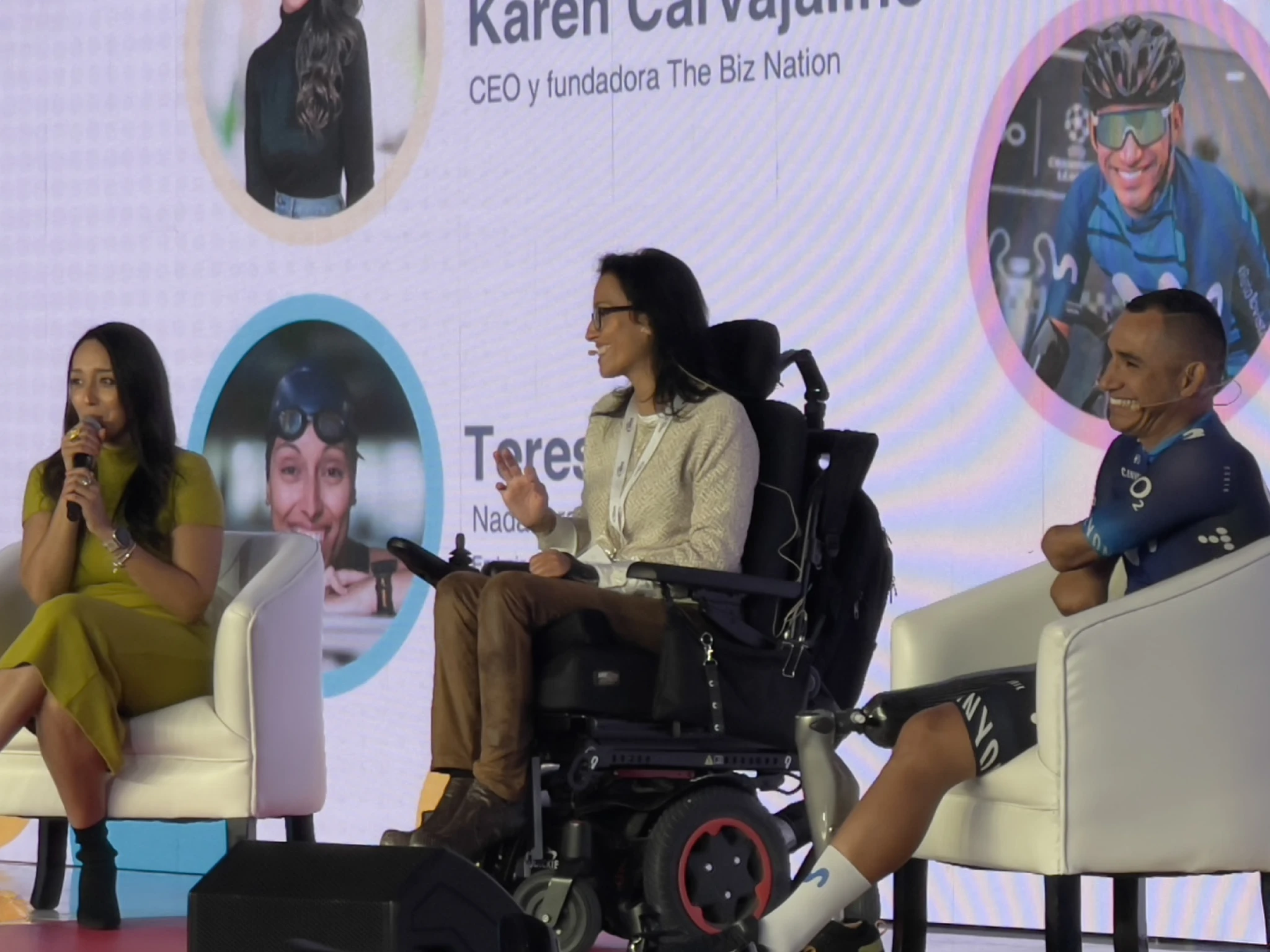
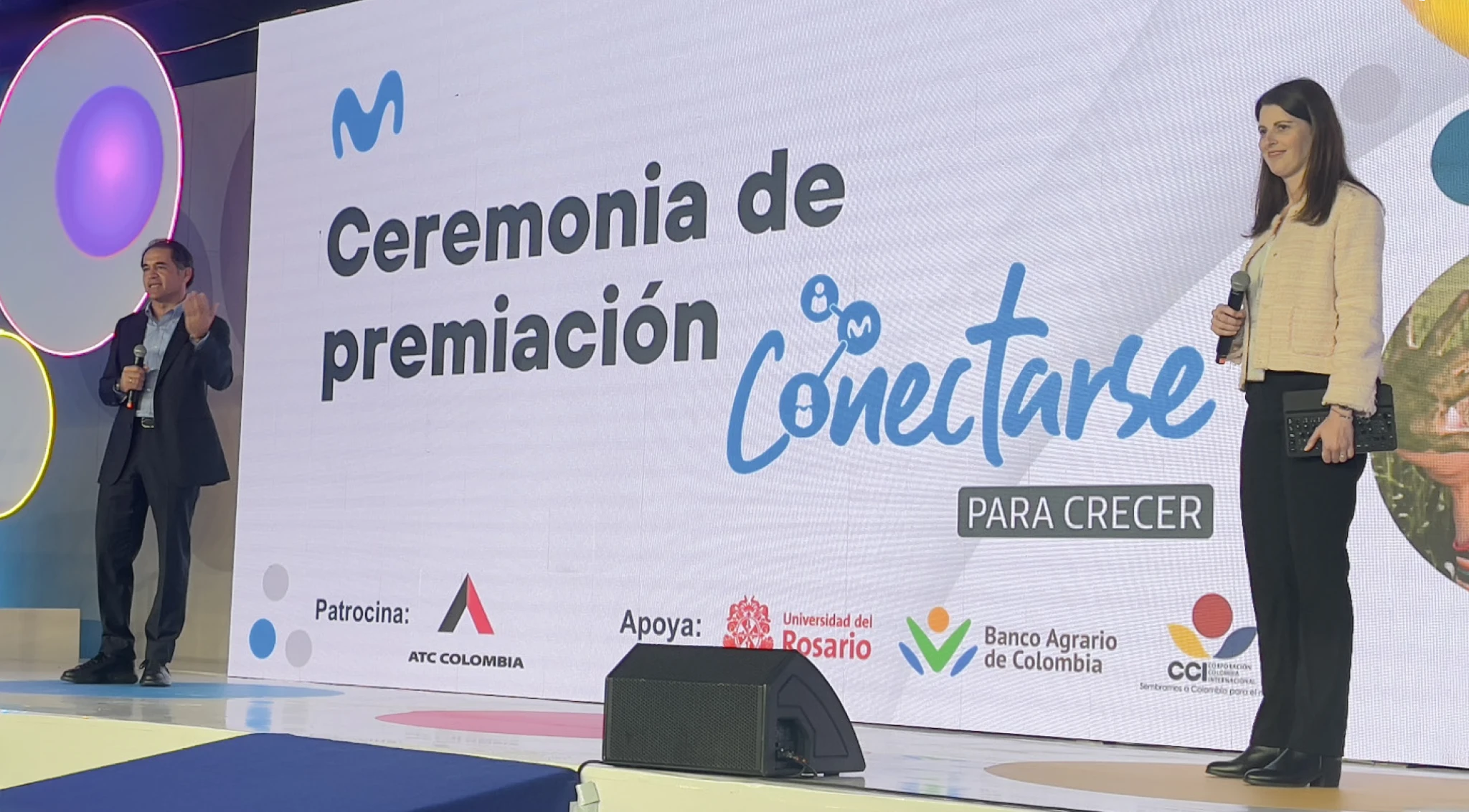
As part of the meeting, Telefónica Movistar Colombia celebrated the second edition of the “Conectarse para Crecer” (Connect to Grow) award, which supported projects of rural women who use technology for social and economic development. Eighty-two applications were received in categories such as Education, Environment, Business in Progress and Health, and three winners were awarded. The initiative was supported by several entities: American Tower, Universidad del Rosario and OAS-CITEL.


Ruta del Jaguar 2024:
Promoting Well-Being in Vaupés
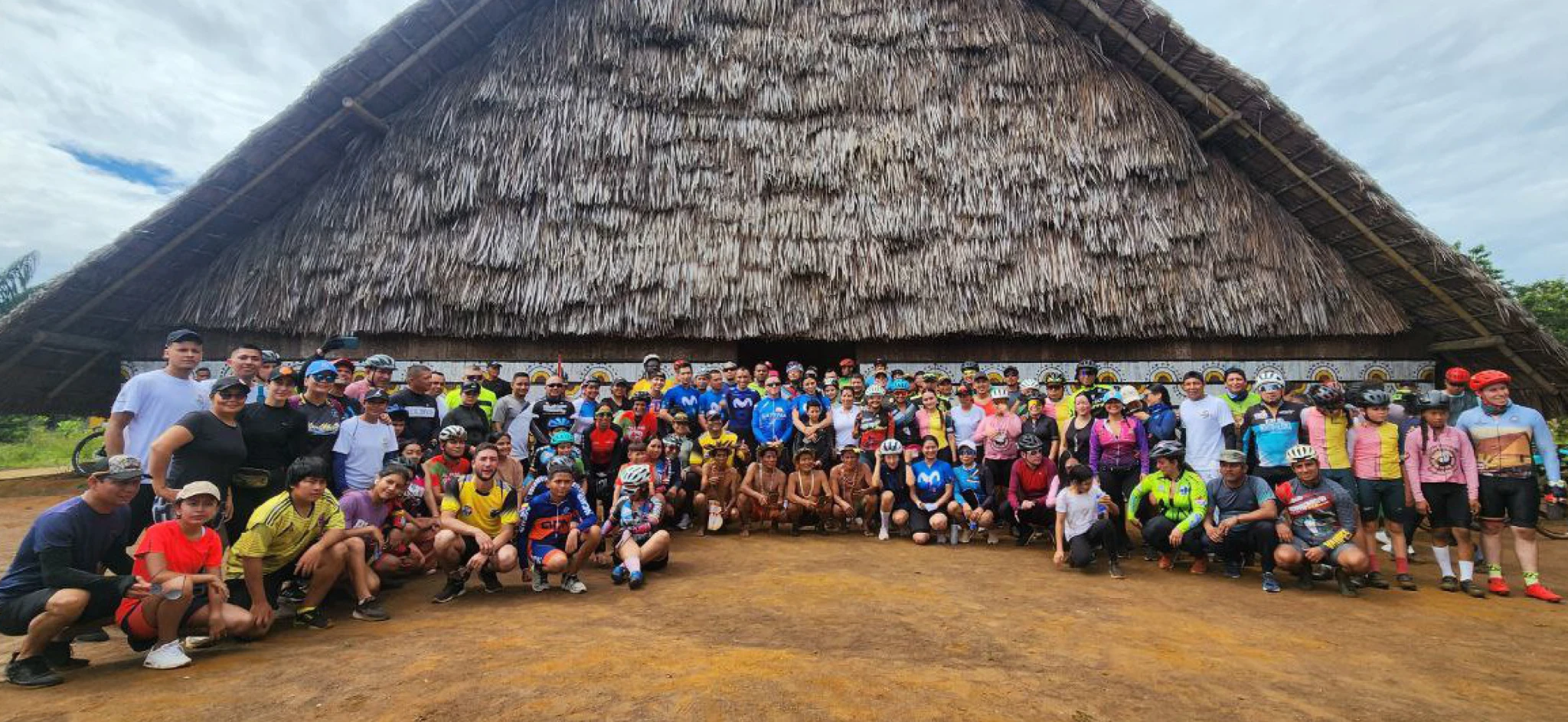
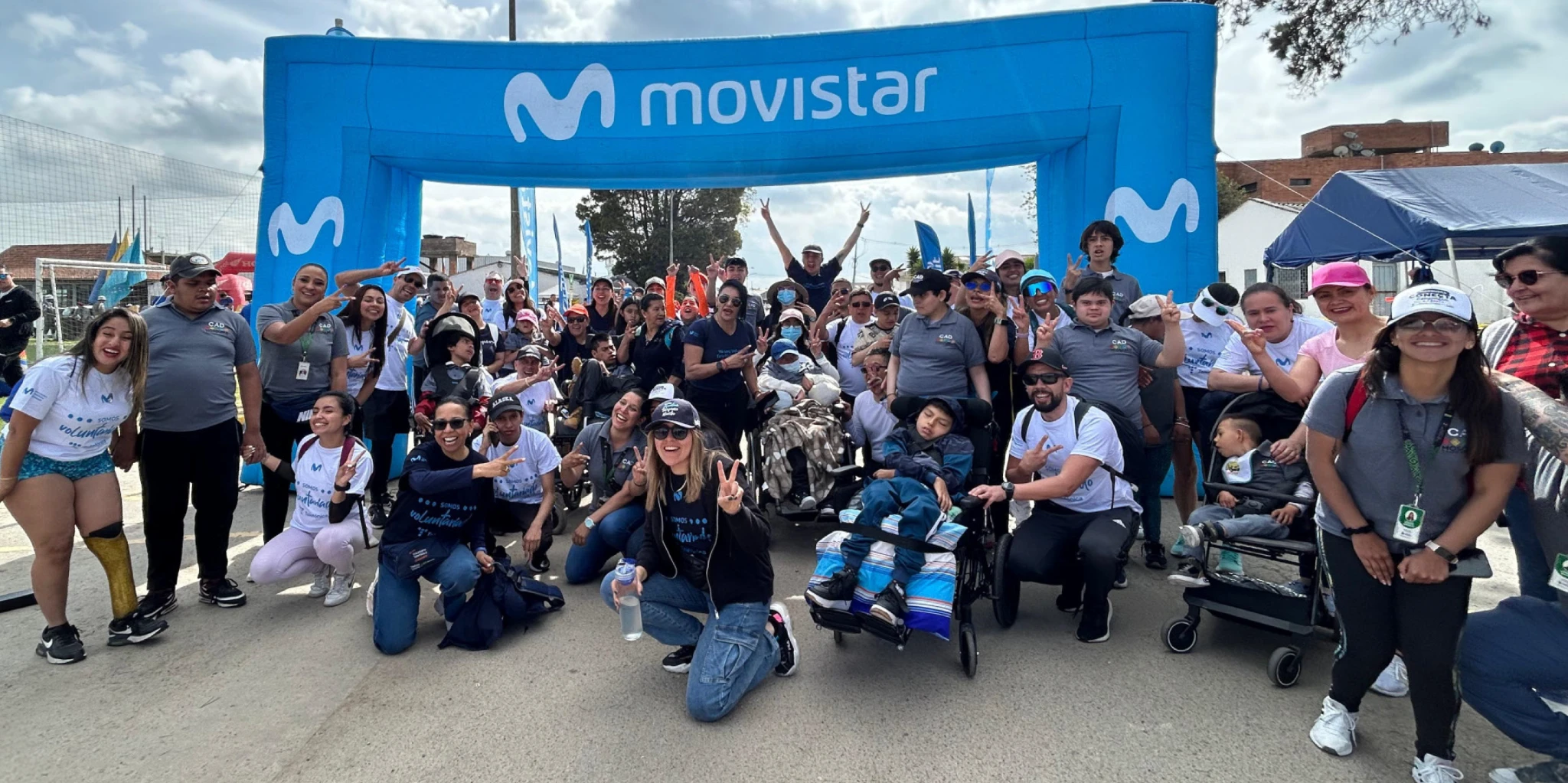
The department of Vaupés faces the highest rate of youth suicide in the country, influenced by cultural and social factors such as forced displacement and the affectation of the territories. In response to this situation, the Government of Vaupés, through the Secretary of Government and its Social Manager, implemented actions aimed at improving the mental health of adolescents and young people. In this context, and in partnership with Telefónica Movistar Colombia, the “Ruta del Jaguar 2024 for life, people with disabilities and their caregivers” was developed, a MTB cycling race with 200 bikers participating. This initiative promoted sports as a tool to strengthen self-confidence, well-being and quality of life, in addition to contributing to the reduction of anxiety.
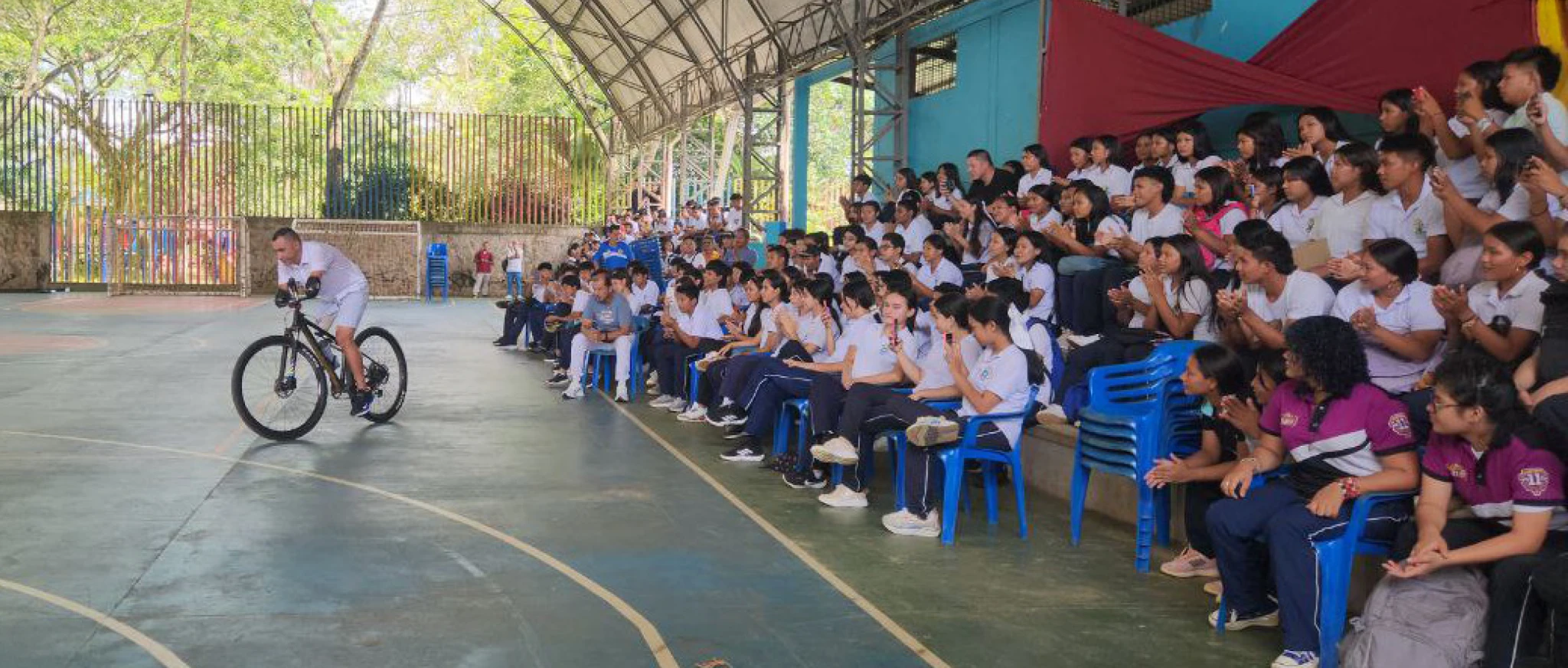
Prior to the event, paralympic cyclist and Movistar ambassador Juan José Florián, known as “Mochoman”, gave inspiring talks to people with disabilities, caregivers and students, impacting more than 500 people with his testimony of resilience and overcoming challenges.
FAC 105th Anniversary Race "Run like the Wind
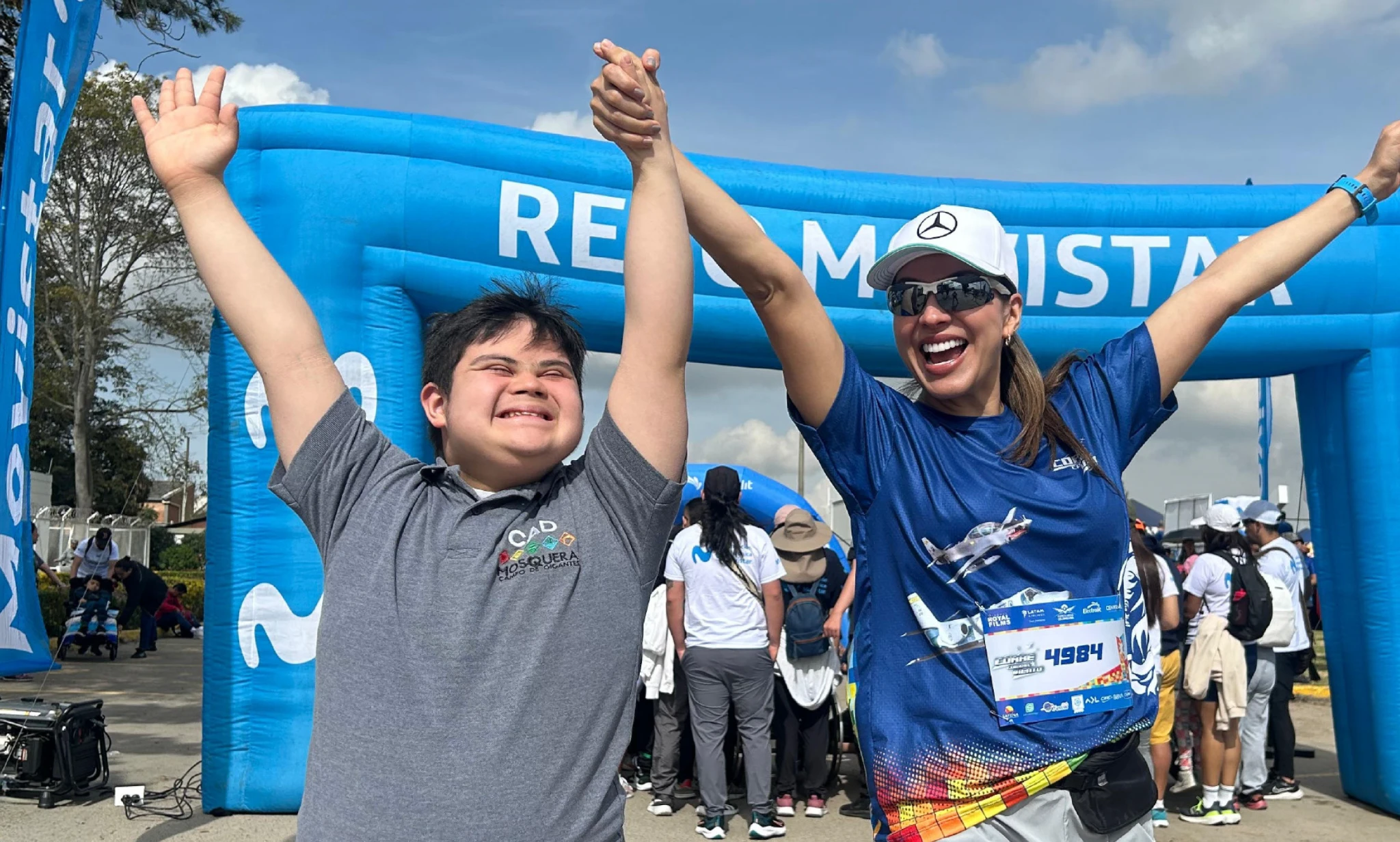
In commemoration of the 105th anniversary of the Colombian Air Force (FAC), Telefónica Movistar Colombia and its Telefónica Movistar Colombia Foundation joined forces with this institution to organize a 500-meter race in which 30 children with functional diversity participated. This initiative highlighted the importance of inclusion and teamwork, demonstrating that solidarity and community spirit can have a positive impact on society.
Human Talent
Management
With people at the center of the strategy, the Company is convinced that maximizing employee potential and increasing their motivation are the enablers of change and sustainable growth. Their enthusiasm and commitment to Telefónica’s purpose and values is key to achieving its objectives.
In 2024, the Company continued to be a relevant actor of employability in the country. In the six regions (Central Administration, Bogotá, Caribbean, Northwest, East and South), 5,422 employees were engaged, 47.6% of them women and 52.4%, men.
It is important to note that for all data in this chapter, the Company’s headcount as of December 31, 2024 was taken as the closing date. It does not include the Telefónica Foundation payroll. Income and turnover indicators do not include temporary positions or interns.
Employees by type of contract and gender
| Type of contract | Women | Men | Grand total | |||
|---|---|---|---|---|---|---|
| Indefinite | 2,019 | 37.2 | 2,370 | 43.7 | 4,389 | 80.9 |
| Temporary | 460 | 8.5 | 397 | 7.3 | 857 | 15.8 |
| Learning | 92 | 1.7 | 64 | 1.2 | 156 | 2.9 |
| Fixed | 9 | 0.2 | 11 | 0.2 | 20 | 0.4 |
| Grand total | 2,580 | 47.6% | 2,842 | 52.4% | 5,422 | 100% |
*Does not include Foundation Payroll
Employees by type of contract and region
| Type of contract | Central administration | Bogotá | Caribbean | Northwest | East | South | Grand total | |||||||
|---|---|---|---|---|---|---|---|---|---|---|---|---|---|---|
| Indefinite | 2,167 | 40.0 | 505 | 9.3 | 446 | 8.2 | 412 | 7.6 | 377 | 7.0 | 482 | 8.9 | 4,389 | 80.9 |
| Temporary | 5 | 0.1 | 252 | 4.6 | 127 | 2.3 | 223 | 4.1 | 119 | 2.2 | 131 | 2.4 | 857 | 15.8 |
| Learning | 81 | 1.5 | 17 | 0.3 | 12 | 0.2 | 19 | 0.4 | 15 | 0.3 | 12 | 0.2 | 156 | 2.9 |
| Fixed | 20 | 0.4 | 0.0 | 0.0 | 0 | 0.0 | 0.0 | 0.0 | 20 | 0.4 | ||||
| Total | 2,273 | 41.9% | 774 | 14.3% | 585 | 10.8% | 654 | 12.1% | 511 | 9.4% | 625 | 11.5% | 5,422 | 100% |
* Foundation’s payroll not included.
Hiring
and rotation
Total number and rate of new employee hires by age group, gender and region.

| Regional | Women | |||||||
|---|---|---|---|---|---|---|---|---|
| Less than 30 | Between 30 and 50 | Over 50 | Total | |||||
| Central administration | 18 | 4.8 | 22 | 5.9 | 0.0 | 40 | 10.7 | |
| Bogota | 8 | 2.1 | 22 | 5.9 | 0.0 | 30 | 8.0 | |
| Caribbean | 4 | 1.1 | 16 | 4.3 | 0.0 | 20 | 5.3 | |
| Northwest | 11 | 2.9 | 19 | 5.1 | 1 | 0.3 | 31 | 8.3 |
| East | 11 | 2.9 | 9 | 2.4 | 0.0 | 20 | 5.3 | |
| South | 12 | 3.2 | 15 | 4.0 | 0.0 | 27 | 7.2 | |
| Grand total | 64 | 17.1% | 103 | 27.5% | 1 | 0.3% | 168 | 44.9% |
*Scholarship holders or temporary employees not included.
| Regional | Men | Grand total | ||||||||
|---|---|---|---|---|---|---|---|---|---|---|
| Less than 30 | Between 30 and 50 | Over 50 | Total | |||||||
| Central administration | 34 | 9.1 | 33 | 8.8 | 0.0 | 67 | 17.9 | 107 | 28.6% | |
| Bogota | 11 | 2.9 | 16 | 4.3 | 0.0 | 27 | 7.2 | 57 | 15.2% | |
| Caribbean | 10 | 2.7 | 17 | 4.5 | 0.0 | 27 | 7.2 | 47 | 12.6% | |
| Northwest | 12 | 3.2 | 23 | 6.1 | 2 | 0.5 | 37 | 9.9 | 68 | 18.2% |
| East | 9 | 2.4 | 12 | 3.2 | 0.0 | 21 | 5.6 | 41 | 11.0% | |
| South | 6 | 1.6 | 21 | 5.6 | 0.0 | 27 | 7.2 | 54 | 14.4% | |
| Grand total | 82 | 21.9% | 122 | 32.6% | 2 | 0.5% | 206 | 55.1% | 374 | 100% |
Total number and turnover rate by age group, gender and region.
| Regional | Women | |||||||
|---|---|---|---|---|---|---|---|---|
| Less than 30 | Between 30 and 50 | Over 50 | Total | |||||
| Central administration | 18 | 7.2% | 67 | 26.9% | 18 | 7.2% | 103 | 41.4% |
| Bogota | 10 | 8.9% | 39 | 34.8% | 3 | 2.7% | 52 | 46.4% |
| Caribbean | 6 | 10.7% | 13 | 23.2% | 2 | 3.6% | 21 | 37.5% |
| Northwest | 14 | 12.2% | 36 | 31.3% | 3 | 2.6% | 53 | 46.1% |
| East | 8 | 9.8% | 27 | 32.9% | 2 | 2.4% | 37 | 45.1% |
| South | 14 | 15.2% | 24 | 26.1% | 5 | 5.4% | 43 | 46.7% |
| Grand total | 70 | 9.9% | 206 | 29.2% | 33 | 4.7% | 309 | 43.8% |
Total index Rotation
15,74%
*Scholarship holders not included
| Regional | Men | Grand total | ||||||||
|---|---|---|---|---|---|---|---|---|---|---|
| Less than 30 | Between 30 and 50 | Over 50 | Total | |||||||
| Central administration | 28 | 11.2% | 92 | 36.9% | 26 | 10.4% | 146 | 58.6% | 249 | 35.3% |
| Bogota | 11 | 9.8% | 41 | 36.6% | 8 | 7.1% | 60 | 53.6% | 112 | 15.9% |
| Caribbean | 4 | 7.1% | 27 | 48.2% | 4 | 7.1% | 35 | 62.5% | 56 | 7.9% |
| Northwest | 13 | 11.3% | 39 | 33.9% | 10 | 8.7% | 62 | 53.9% | 115 | 16.3% |
| East | 6 | 7.3% | 34 | 41.5% | 5 | 6.1% | 45 | 54.9% | 82 | 11.6% |
| South | 1 | 1.1% | 35 | 38.0% | 13 | 14.1% | 49 | 53.3% | 92 | 13.0% |
| Grand total | 63 | 8.9% | 268 | 38% | 66 | 9.3% | 397 | 56.2% | 706 | 100% |
Diversity,
Equity and Inclusion
GRI Content 404-3, 405-1, 406-1
Companies are a reflection of the people who work in them. For this reason, Diversity, Equity and Inclusion (DEI) management is a key lever to drive the digital transformation and the Company’s Responsible Business Plan. Accordingly, the Company has a global Diversity Council and a local Diversity Council, which is responsible for the design, implementation and monitoring of all diversity actions, programs and initiatives.
In addition, the Telefónica Group’s Board of Directors reinforces its commitment to a Global Diversity Policy, which guarantees equal opportunities, an inclusive culture, and fair treatment throughout the organization. This policy rejects any form of discrimination based on factors such as nationality, ethnicity, gender, sexual orientation, disability, age or religion.
At the end of 2024, 52.4% of employees were men, while 47.6% were women. The composition of the workforce by gender and job category is as follows:
Employees by labor category
| Category | Women | Men | Grand Total | ||||||
|---|---|---|---|---|---|---|---|---|---|
| Under 30 | Between 30 and 50 | Over 50 | Total Women | Under 30 | Between 30 and 50 | Over 50 | Total Men | ||
| Middle Management | 0% | 3.8% | 0.4% | 4.2% | 0.1% | 4% | 1.1% | 5.2% | 9.4% |
| Rest of Staff | 6% | 33.1% | 3.1% | 42.2% | 6.7% | 35.2% | 6.5% | 48.4% | 90.6% |
| Grand Total | 6% | 36.9% | 3.5% | 46.5% | 6.7% | 39.2% | 7.6% | 53.5% | 100% |
*Management, interns or temporary employees not included.

Telefónica has consolidated a comprehensive strategy that promotes safe and valued workplaces, with a focus on the individuality of each employee. These initiatives are reflected in key indicators, organizational diagnostics, inclusive culture and an employer brand recognized for its diversity.
Key Performance Indicators
KPIs are established to accurately measure and evaluate progress in inclusion, closing gaps and diversity in the work environment. These indicators are essential to obtain a quantitative and qualitative view of the efforts made and their impact.
In 2024, the performance evaluation exercise was carried out, and applied to more than 4 thousand employees in the following roles:
Individual contributor

Middle Management

PreDirectivos

Managers

Diverse Employer Brand
To project the Company as a place that actively promotes diversity, equity and inclusion, with a focus on making these qualities visible and transmitting them to potential collaborators, thus consolidating an employer brand as a synonym of a diverse and respectful work environment.
Inclusive Culture
Initiatives are implemented to foster an inclusive work environment, promoting diversity in all its aspects. In addition, we seek to cultivate an organizational culture that values and respects individual differences. This approach is not only aimed at superficial changes, but at creating a collective mindset of respect and appreciation for diversity.
Organizational Diagnosis
Diagnostics are conducted to assess the current state of the organization and its progress on the different diversity fronts, analyzing its level of advancement. This approach provides a detailed understanding of the areas requiring attention and guides the implementation of effective strategies.


These four strategic pillars are the basis of the actions in Diversity, Equity and Inclusion, leveraged on a more inclusive and equitable organizational culture that has scope in the following five work fronts:
Gender Equity
Promotes initiatives focused on contributing to closing the gap and generating spaces with equality between men and women. Some of the actions taken in 2024 are:
Recruitment with a gender focus: Transparent and unbiased processes implemented, guaranteeing equal opportunities. In leadership roles, at least one woman is included in the final shortlist, and vacancy announcements are free of discriminatory criteria such as sex, age, ethnicity or disability.
Launch of WomenTech: This initiative promoted the hiring of women in technological areas, with the participation of 57 women in strategic projects, achieving two internal movements and involving them in key selection processes.
Futura Program: Designed to strengthen women’s leadership, it offered training in 10 modules focused on skills such as negotiation, communication and personal leadership. With more than 400 participants, the program boosted 15 movements to positions of greater responsibility.
Goals have been defined to leverage equity and the promotion of female leadership in higher level positions. By the end of 2024, 42.8% women held managerial positions, and 39.8% held leadership positions.
Obtaining the Equipares Gold Seal certifies the Company’s commitment to diversity, equity and inclusion, reflected in its internal policies and practices.
The Company adheres to the UN Women Women’s Empowerment Principles (WEPs) and the Global Compact, and strongly expresses its commitment to the promotion of gender equality and the empowerment of women, both in the workplace and within the community in general.
Generational
Implementation of actions and programs aimed at integrating people from different generations of the organization and launching programs that connect with talent by opening the doors to young people under 35 years of age, providing them with the necessary tools and support to encourage them to participate in the creation of a new digital world through programs that promote their involvement in the organization. By the end of 2024, 36.7% of the workforce were people under 35 years of age.
The Company is measured annually in Employers For Youth EFY, a quantitative study that seeks to recognize and understand the expectations and behaviors of young professionals, as well as the attributes they value most in their companies. For 2024, Telefónica Movistar Colombia ranked 23rd out of 35 in the country.
Annual participation in the Best Internship Experiences BIE ranking, a quantitative study that seeks to recognize and understand the expectations and behaviors of young interns, as well as the attributes they value most in their companies. For 2024, Telefónica Movistar Colombia was ranked 18th in the country.
With the Ranking of Companies Committed to Youth, the Company is positioned as one of the best companies for young professionals, identifying and positioning its initiatives in the market. For 2024, Telefónica Movistar Colombia Hispam attained the 4th place within the top 10 of the recognized organizations.
LGBTQI+ Community1
A safe working environment for members of the LGBTIQ+ community is fostered by promoting respect and non-discrimination. It is also managed in this pillar:

Extensive benefits for the LGBTIQ+ community were maintained (wedding, bereavement, homoparental, and school leave, among others), promoting their use through a communication campaign.
Mixed bathroom in the facilities, a space designed to promote equality and value diversity, thus demonstrating the commitment to the well-being and inclusion of the staff.
Deployment of communication campaigns to raise awareness about respect and inclusion of members of the LGBTIQ+ community.
1 Lesbian, gay, bisexual, transgender, queer and intersex (LGBTQI)
People with Disabilities
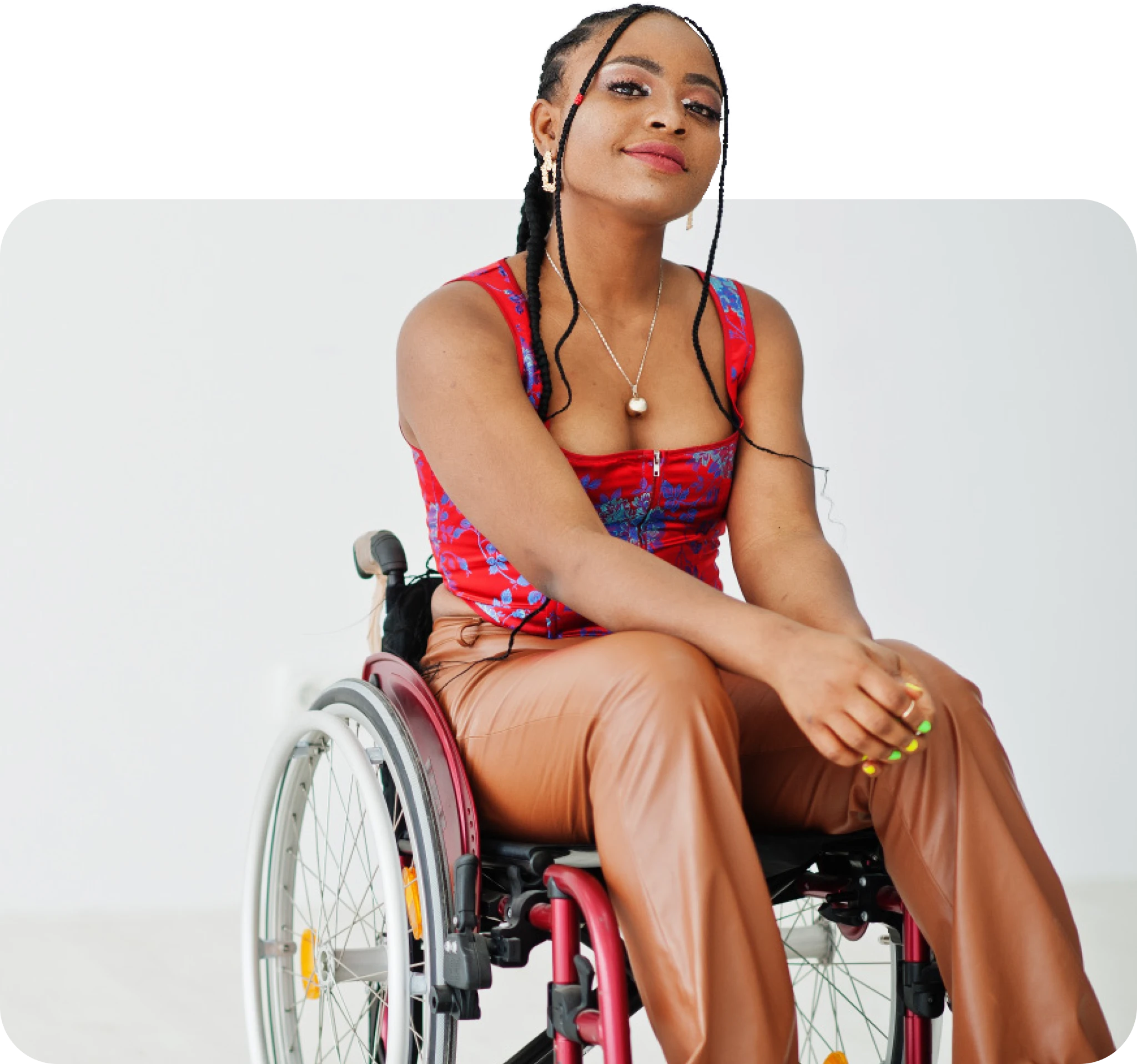
In 2024, the Company continued to promote the incorporation of people with disabilities into its workforce. At the end of the year, the Company had 10 certified people with disabilities. In addition, the following actions were implemented:
Relaunching of the Manual for People with Disabilities, a guide that provides recommendations to eliminate the barriers that are imposed every day with the interaction of people with disabilities.
Creation of spaces to raise awareness about disability through talks, discussions, testimonials and panels within the organization.
Launching of communiqués to facilitate and guide employees in obtaining their disability certificate.
Multiculturalism
The Company promotes the integration of people of different origins and ethnicities, through the deployment of training actions and communication campaigns to raise awareness about the integration of other cultures, ethnic communities and races. Telefónica has a community in Workplace with more than 10 thousand employees called “Diversaliad@s” where they share actions, communication, information and workshops to generate learning and awareness about diversity in general and in its five work areas. For 2024, more than 20 training actions were carried out, impacting more than 2,700 employees. 100% of the managers are of local origin.


Freedom
of Association
In line with the Responsible Business Principles and the Human Rights policy, the Company guarantees the right of employees to belong to the union that represents them and does not tolerate any type of retaliation or hostile action towards those employees who participate in union activities, and according to the third Principle of the Global Compact (companies should support freedom of association and the effective recognition of the right to collective bargaining) by 2024, 2.8% of the total number of employees were covered by collective bargaining agreements. It should be noted that the Company determines the labor and contractual conditions of both unionized and non-unionized workers, in accordance with the provisions of the law.
Salary

For Telefónica Movistar Colombia, it is of great importance to have a solid and consistent salary structure that recognizes individual performance, values the importance and impact of each position within the organization and that is competitive in the national salary market. This structure is based on a systematic process that covers from the description to the salary allocation for the organization’s positions, as well as the constant comparison with the market to determine the competitiveness of salaries.
This process is carried out based on the position and its valuation and impact on the organization, not on its occupants, so gender is not a determining factor in the calculation of the salary assignment, nor to evaluate its behavior in the market.
Salary Structure
The Company has a job leveling structure as a result of an appraisal, which covers a range of 12 different levels, grouping the non-management positions of the organization. Each level is compared for internal equity and external competitiveness to determine the corresponding salary conditions, thus avoiding biases due to salary allocations for higher levels. Consequently, the remuneration defined for the position holders correspond to the functions, responsibilities and their impact on the organization. Therefore, there is no comparison in the salary allocation of a Pre-Management level, compared to the average of the organization, taking into account that more than 60% of the employees represent the lower levels of this scale (4 to 9).
Compensation for all levels is set based on criteria of external competitiveness (salary market), internal equity (comparison by levels and families of positions) and the economic context of the organization. According to the nature of the functions of each position, a compensation mix is set that includes fixed salary, commissions and annual bonus for organizational results.
Fixed Monthly Salary: no direct employee has less than the minimum legal salary in force each year.
Variable Salary (commissions): applies to employees who perform commercial sales or customer service activities and whose goals are defined and measured by the Commercial Planning area.
Annual Bonus: applies to direct employees of the organization and is typically assigned to non-business positions. Its allocation percentage varies according to the impact of the role on the achievement of business objectives. To measure the results of each of Telefónica’s operations, fundamental axes are established with a specific weight, measured at the end of each year to establish the percentage of bonus payment for results. For 2024, these were the KPIs measured:
| NPS: 5% | Emissions: 5% | Women: 5% |
Compensation
Ratio
GRI Content 2-21, 202-1, 405-1, 405-2
In 2024, the compensation ratio was 801%, resulting from the calculation of the highest versus the median compensation assigned. The calculation took into account the Company’s plant without scholarship holders, young professionals, foundation and executives.
Additionally, the percentage of increases was set at an average of 9.08% for the Company, being 15% the maximum increase, taking into account the increase established by law and the parameters of compliance with performance indicators. The calculation took into account the Company’s plant without Scholarship Holders, Young Professionals, Foundation, or Executives.
The Company has the Equipares Gold Seal, and an action plan to close the gender gaps identified in annual salary gap diagnoses:
| Type of Position | -29% | -17% | -30% | -1% |
| Difference | Manager | Chief | Professional | Analyst |
Well-Being, Teleworking and
Work-Life Balance
The Company promotes innovative programs to improve work-life balance, highlighting:
UNO Benefits
On an anual basis, UNO Benefits plan allows all direct employees of the organization, including interns and SENA apprentices, to program 1,000 and 500 credits respectively, and enjoy the benefits they want, according to their needs and interests. Currently, the program has the following benefits:

Flexible Saturday: Half day off (applies to Experience Centers).
My Birthday: One day off in the birthday month.
Eight are Better: An extra day for vacation from 7 to 14 consecutive days.
15 = 17: Two additional days for full vacation.
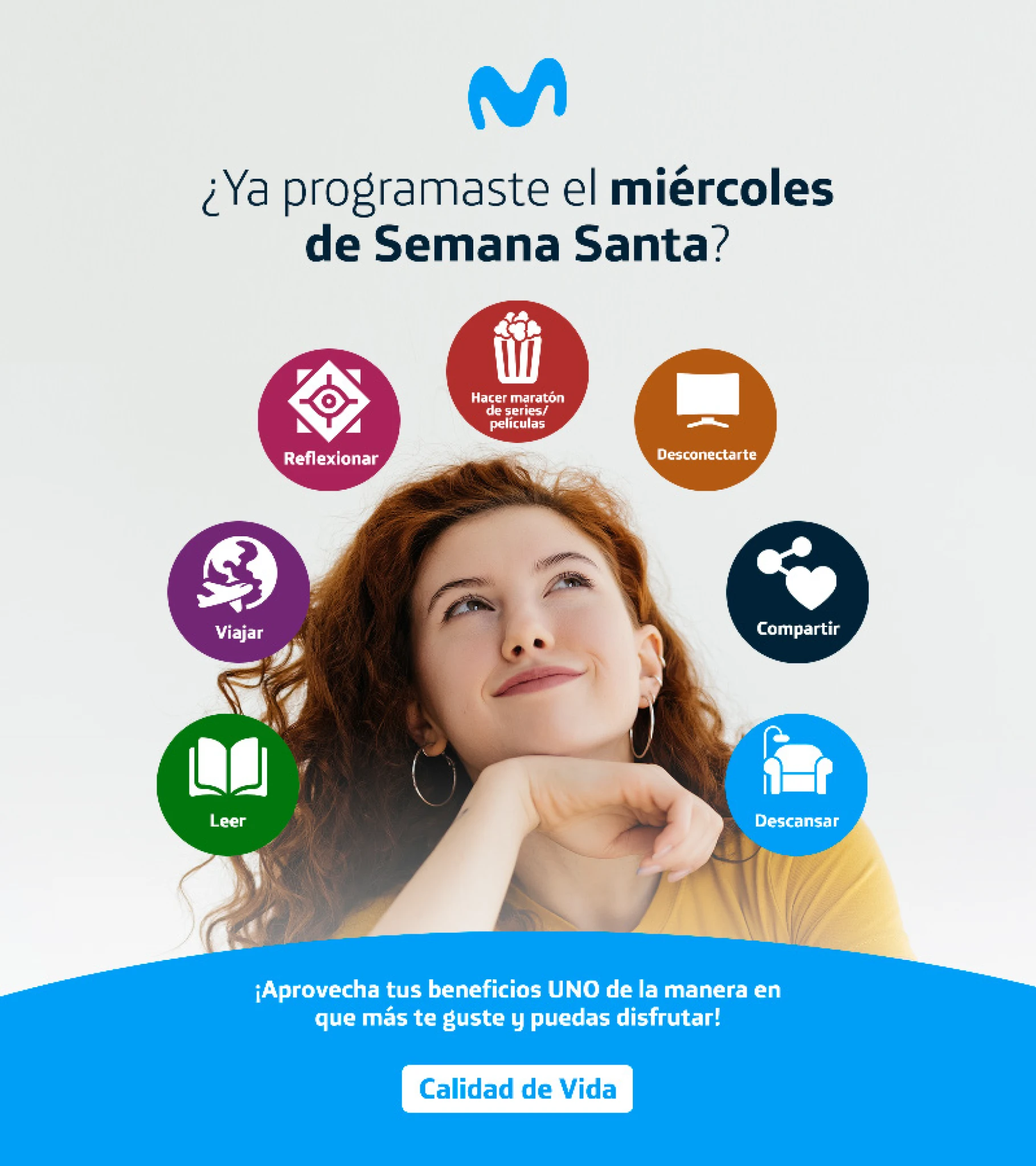
Easter Wednesday: Half day off with continuous schedule.
Christmas Shopping: Half day off for Christmas shopping.
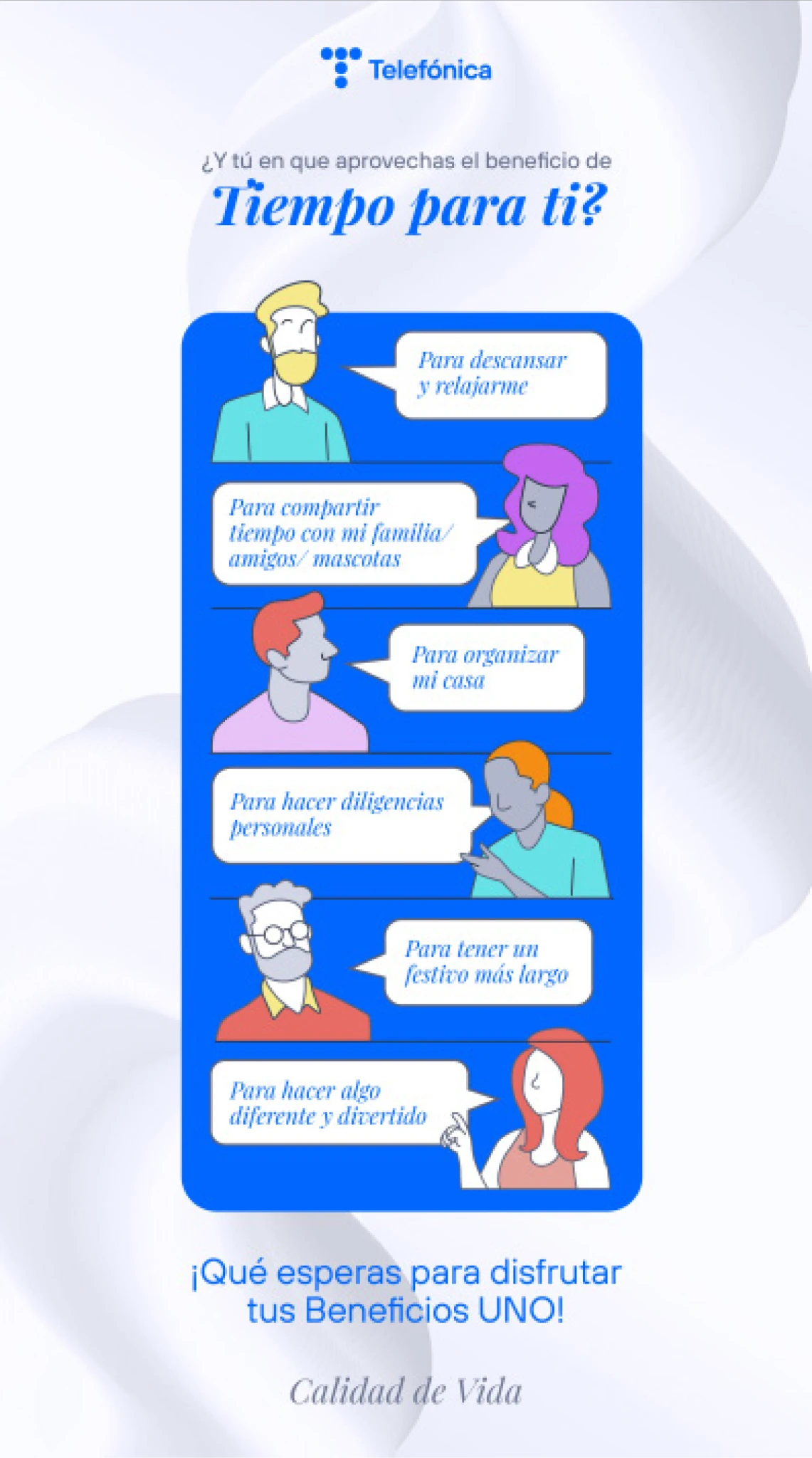
Time for You:
Half day off for personal activities.
Christmas is Here and The Twelve Grapes: Two days off in December for Christmas and New Year’s Day.

Movistar Moments
Movistar Momentos is a portfolio of customizable experiences in categories such as rest, culture, sports, gastronomy, recreation, wellness and tangible products. Activities can be shared with family or friends depending on location. It also includes free activities organized by the Company.
By the end of 2024, 91% of employees enjoyed at least one experience during the year, 92% women and 91% men. This includes experiences, tangible portal products and area activities.
Hybrid Working Scheme
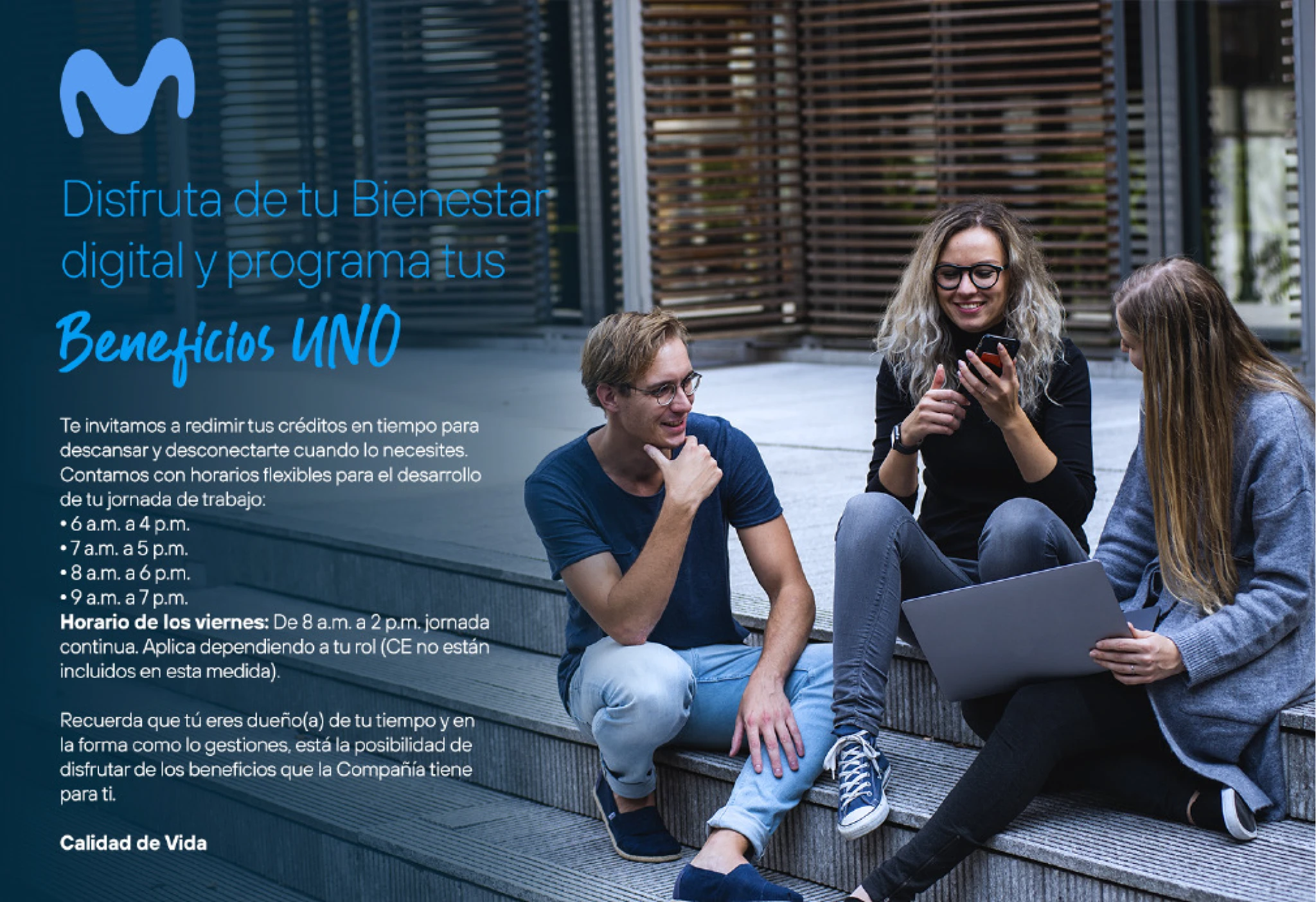
Although a hybrid working model has been established since 2022, in 2024 the Company instructed employees in administrative positions to come to the office three days per week and work remotely on the other two. In the wake of the pandemic, the issue of digital disconnection took on greater importance, so we continued to design strategies focused on time management and digital wellness. Here are some examples of such communications.
The Company provides connectivity to employees through an endowment plan with unlimited data, value that the Company assumes with the granting of the endowment plan and is not paid directly to the employees. Additionally, it has employee plan benefits to acquire Movistar services with a special discount. The Company also recognizes the corresponding value of the electric energy used in the work tools of the employees, under the concept of teleworking assistance (in accordance with the applicable policies in force).
Time Flexibility
The Company offers a series of benefits related to time and flexibility in the workday without affecting remuneration. Its main objective is that employees can choose the option that best suits their needs and preferences.
This program includes flexible schedules (Monday through Thursday) and “Disconnection Fridays” with a continuous workday from 8:00 AM to 2:00 PM. This benefit does not apply in Experience Centers, where they can access the “Two Days per Friday Schedule” benefit.
Other Benefits
The Company also offers a variety of other time benefits that allow for work flexibility. These are paid leaves of absence (in addition to what is provided by law). Benefits such as: extended maternity and paternity leave, parental leave, gradual return or soft landing, leave in case of miscarriage or non-viable birth, school leave, time for your wedding, domestic calamity leave.
Parental Leave
In 2024, 120 employees requested a parental leave: 63 women were entitled to maternity leave and 57 men to paternity leave.
Similarly, 118 employees returned to work after the leave in 2024 (61 women and 57 men), which could have started in 2023 or 2024. There are currently no cases that meet the condition of continuing 12 months after returning to work. Eight women were on maternity leave at the end of 2024.
Return and retention rates for employees who took parental leave were 98% for both women and men.

Employee
Benefits(as)
The standard benefits for full-time employees are:
Disability assistance
The Company complements the EPS payment up to 100% of the income during the first 180 days of disability. Benefit subject to change by decision of the Company.
Additional paid time in addition to that established by law
Extension of licenses:
Maternity: +2 weeks (total 20 weeks).
Paternity: +6 working days (total 14 working days).
Soft landing: One-hour daily reduction in the workday for 30 days after returning from leave.
Special permits
School: Two half-days per year and three hours per two-month period for children’s school activities.
Domestic calamity: Paid leave in serious cases affecting personal or family life.
Abortion or non-viable childbirth leave: Two weeks of paid leave for affected couples.
Wedding: Four paid days.
Homoparental leavel: Primary caregiver: 20 weeks (22 in multiple births. And secondary caregiver: 14 working days with pay.

Life insurance
Covers death or permanent total disability. Policy assumed in its entirety by the Company from the beginning of the contract.
Training
and Performance
The Company promotes constant training for its employees, adapting to the needs of the business environment. During 2024, several outstanding initiatives were implemented:

Digital Minds Academy:
Update of the cultural program focused on agile methodologies and new ways of organization.
CX Academy:
Launched for the entire organization, it drives a customer-centric culture and service improvement.
Dexway language program:
Employees were granted licenses in English, Portuguese and German.
DesarrollaT:
Virtual and collaborative program with 11 topics, open workshops and e-learning. 605 employees in Colombia participated.
Universitas (Corporate University):
Offered monthly training in leadership and reskilling. A total of 632 people participated in Colombia.
Coaching:
Aimed at developing human potential, with the participation of five Colombian leaders.
Master Leader:
Program for leaders, with tools for the development of professional and personal skills. In 2024, 693 leaders from Colombia participated in talking circles to share best practices.
UDEMY Platform:
Training routes were strengthened with more than 600 courses for key areas such as BI, Networking, Digital Relationships and Technology, guaranteeing continuous innovation.
Average training: Each employee completed an average of 37.1 hours of training, with differences by gender and job level.


Individual contributors: 37.7 hours
Middle management: 33.2 hours
Executives: 10.4 hours.
ESG Academy: A global platform for sustainability training, integrating topics such as environment, diversity, cybersecurity, ethics, and compliance. It includes courses, webinars, podcasts, and articles accessible to all employees. In 2024, the main courses completed by employees as part of this initiative were:
| ESG Training: | % of employees trained |
|---|---|
| Responsible Business Principles | 97% |
| Leading Diversity | 3.7% |
| Female Empowerment | 3% |
| Cybersecurity for Employees: Personal Protection and Co-Responsibility | 72% |
| Global Privacy Policy | 32% |
Employee Health
and Safety
GRI Content 403-1, 403-2, 403-5, 403-6, 403-7, 403-8, 403-9
The Company’s Occupational Health and Safety Management System (OHSMS), designed under the ISO 45001:2018 standard, is evaluated annually through external audits that verify its compliance and renew its certification. In addition, it is managed in accordance with the legal requirements defined by Decree 1072/2015 and Resolution 0312/2019, which are analyzed and verified annually.
Although certification is not mandatory, a Minimum Standards Evaluation is performed in accordance with Resolution 0312/2019, reporting the results to the Ministry of Labor and the ARL. In 2024, the Company achieved 100% compliance, exceeding the acceptable standard of 86%.
The SGSST covers 100% of employees and extends to all activities and operating sites nationwide. Its implementation involves all areas of the organization and allied companies through the “Responsible Allies” program.
The identification of hazards, evaluation and risk assessment is performed following the methodology of the Colombian Technical Guide GTC45 version 201 People Approach and Headquarters Approach. In the “People” approach, the Groups of Similar Exposure (GES) are grouped considering the activities of each position, including the risks associated with teleworking.
The SGSST ensures the integral management of occupational health and safety, promoting a safe working environment and complying with the highest quality standards.

The classification of the people approach is as follows:
IPEUR Matrix by Job Type - People Approach

Administrative
Performing administrative activities, generally at a desk in front of a computer, at the company’s headquarters and outside the company (teleworking).
Store (CE)
Performing commercial activities, generally at a desk in front of a computer, serving the customers visiting the place of work (commercial establishment).
Commercial / Administrative
Performing administrative and commercial activities in and outside the Company (teleworking), usually at a desk in front of a computer, and also moving outside the assigned workplace to perform work or commercial tasks.
Operational / Administrative
Alternating tasks in and outside the company (teleworking), performing administrative activities (at the assigned workplace, usually at a desk in front of a computer) and operational activities inside or outside the assigned workplace (in the field), in which he supervises and receives work from contractors.
Operational / Heights
Alternating tasks in and outside the Company (teleworking), performing administrative activities (in the assigned workplace, usually at a desk in front of a computer) and operational activities inside or outside the assigned workplace (in the field), in which work can be performed at a height greater than 2.0 meters (if required by the operation). Such work is done under the procedures defined by the organization.
Commercial / 100% in the street
Carrying out activities in areas with population of commercial interest (selling fixed products door-to-door and mobile products).
Under the Site Approach, two tools are contemplated to identify and assess the hazards and risks specific to each location: the Vulnerability Analysis and the Matrix for the Identification of Hazards, Evaluation and Assessment of Risks by site typology. This input allows establishing specific controls according to the environment and the site’s own characteristics, aimed at preventing undesired events.
The risk matrix is the basis of the system and is updated annually or in the case of relevant events such as serious accidents, inspections with critical findings, or regulatory changes. This tool makes it possible to prioritize risks and design specific management and epidemiological surveillance programs to reduce exposure to risk factors that may cause occupational accidents or diseases.
Workers have various channels available where they can participate and actively consult the Occupational Safety and Health Management System – OSHMS, as well as report hazards or situations that generate risk to their safety and health. Employee participation in the SGSST is essential and is encouraged through channels such as: Observations in system deployments, Reports of unsafe acts and conditions, and Communications with the Joint Committee on Occupational Safety and Health (COPASST).

The system contemplates the rights and duties of workers for the execution of activities, as well as the communication channels with immediate bosses and Business Partners to report situations or new developments, which are evaluated by the OSH team and determine the level of relevance and materialization. No employee is forced to work under conditions that compromise their safety or health.
Accident Investigation: Workplace accidents are investigated using the 5W+1H methodology, collecting and analyzing all related information to identify root causes. This analysis ensures the implementation of corrective and preventive measures, avoiding the repetition of similar events.
Complementary programs and strategies: The OSHMS includes training and awareness programs to strengthen the safety culture, promoting prevention and the integral wellbeing of employees in all areas of the organization.
Occupational and Preventive Medicine
The occupational and preventive medicine process of the OSHMS focuses on several fundamental pillars: conducting occupational medical examinations, detailed follow-up of medical cases, origin qualification processes, management of absenteeism due to medical causes, and analysis of key indicators such as the prevalence and incidence of occupational diseases.
In addition, all employees and up to five (5) of their family members have free access to 1DOC3, a comprehensive health and wellness platform that operates under the telemedicine modality.
This tool offers care in areas such as general medicine, psychology, nutrition, pediatrics, sexual and reproductive health, and even veterinary services, available 24/7 to ensure continuous and personalized support.

Employee OSH Participation and Consultation
The Occupational Safety and Health Management System (OSHMS) implemented at Telefónica Movistar Colombia encompasses a variety of mechanisms designed to promote the participation and integral wellbeing of employees. Among these mechanisms, the following stand out:
- Joint Committee on Occupational Safety and Health – COPASST.
- Labor Coexistence Committee.
- Road Safety Committee.
- Management review.
- Internal customer – Remedy.
- Report of absences due to health reasons.
- Report of absences due to health reasons.
- Report of health conditions.
- Business Partner, OSH team,
The Joint Occupational Health and Safety Committee (COPASST) is a body of workers’ representatives, elected by national vote, and representatives appointed by the company’s senior management. Its main objective is to ensure constant communication on the needs and results of the OSHMS. This committee has a term of two years, operates continuously and holds regular monthly meetings. In special cases, extraordinary meetings are called, documenting all activities and issues addressed in minutes accessible for consultation by employees nationwide.

OSH Training for Workers
In 2024, Telefónica Movistar Colombia conducted 533 training sessions, equivalent to 15,211 hours, benefiting 9,146 people. These trainings covered essential topics for strengthening the organizational culture in health and safety.
The most important courses include:
The most important courses include:
- 50-hour OSHMS course for new members of the Committees (COPASST, Labor Coexistence Committee and Height Coordinators).
- Reinforcement of 20 hours for those who complete three years of initial training.
Specialized Thematic Training:
- Adaptation to Climate Change: Impact and measures within the Management Systems – aimed at allies.
- Sexual Harassment in the Workplace: Strategies for Prevention and Awareness.
- Prevention of Behavior Affecting Labor Harmony: Training in conflict resolution.
Road Safety and Safe Driving:
- Promoting a culture of road safety: Five safe driving habits.
- Preventive Management Training:
- Prevention of local and public risks.
- Safe mobility.
- Risks in streets and roads.
Induction and Reinduction:
- Induction/ Re-induction of allies: Generalities of the OSHMS and the Environmental Management System.
- Specific OSHMS re-induction for active personnel.
Retraining and Advanced Courses:
- Retraining for Work at Heights: Reinforcement for authorized workers.
- Integrated Management Course: Safety, health, environment and quality management.
Risk Identification and Prevention:
- Hazard Identification and Evaluation workshops specific to each job.
- Socialization of the Emergency Attention Plan:
- First aid.
- Fire control.
- Simulation exercises.
Promotion of Wellness and Healthy Habits:
- Healthy Lifestyles:
- Prevention of musculoskeletal injuries.
- Ergonomic therapies.
- Talks on psychosocial risk.
- Reflection on occupational accidents (lessons learned).
- Occupational Safety and Health Month:
- Strategies to reduce stress.
- Mental gym, resilience and well-being.
- Specific talks such as “Prevention of Electrical Risk at Home”.

Health Promotion, Prevention and Mitigation of OSH Impacts
Telefónica Movistar Colombia ensures that all its employees are affiliated to health insurance companies from the moment they join the Company. In addition, it promotes face-to-face and virtual activities to promote health, based on the results of the reports on health conditions and absenteeism due to medical reasons. Some actions:
Talks and workshops
Emotional intelligence, stress management, corporate happiness, breast cancer, how to act in a crisis situation, work-family balance, emotional regulation, laughter therapy workshop, coping with grief, learning to let go, among other topics of interest. The OHSMS covers all activities, operations and employees, including commercial channels.
Work-Related Injuries
In 2024, the Company did not have any fatalities in operations and did not record any occupational accidents with serious consequences. A total of 58 recordable occupational injury events were recorded, representing a rate of 5.65 per million hours worked. In total, 10,268,163 man-hours worked were recorded.
The main types of work-related injuries to employees are: sprain, strain, muscle tear, blow and contusion.
For workers who are not directly employed, but whose jobs or workplaces are under the control of the organization, there were also no fatalities or occupational accidents with major consequences. There were 79 recordable injury events reported, with a rate of 10.05 per million hours worked, out of a total of 7,861,802 man-hours worked. The main occupational injuries are blows, contusions, sprains, and injuries associated with road safety risks.
Occupational hazards with the potential to cause serious accidents are identified through a hazard evaluation and assessment tool. This process allows prioritizing risks and designing Risk Management Programs or Epidemiological Surveillance Systems focused on reducing the accident rate.
Although no serious occupational accidents occurred in 2024, the hazards that have caused injuries with major consequences have been: road traffic accidents, sports competitions and exposure to public risk.
Risk Management Programs define specific actions focused on risk reduction and accident reduction. The scope of these programs is for 100% of the workers without any type of exclusion.

Occupational Diseases and Illnesses
In 2024, there were no deaths due to occupational diseases, although there was one case of carpal tunnel syndrome. To address these diagnoses, measures such as ergonomic inspections, postural hygiene training, and the provision of ergonomic equipment were activated. These actions are part of the Epidemiological Surveillance System for Musculoskeletal Disorders (SVE DME), which covers 100% of employees.
Human
Rights
GRI Content 2-22, 2-23, 2-24, 2-27
For Movistar, human rights are a material issue. Therefore, the Company works on the design and implementation of various actions aimed at their management, monitoring the impact of these initiatives through a due diligence process on Human Rights, in accordance with the Guiding Principles on Business and Human Rights of the United Nations.
In accordance with these principles, Telefónica Movistar Colombia assumes the responsibility to respect the human rights of all its stakeholders, both internal and external, throughout its operations. Although the State has the obligation to protect these rights, the Company is not exempt from guaranteeing their respect and remedying their impacts.
Telefónica Movistar Colombia acts in accordance with international human rights standards and conventions. This is reflected in its corporate policies, including Telefónica’s Code of Ethics, which establishes the Company’s commitment to respect human rights. This commitment extends from employees to its commercial and operational partners, starting from the moment a business relationship is formalized.
The Company also has a Human Rights Policy that is aligned with the Responsible Business Principles and encompasses other relevant corporate policies, such as gender equity, diversity and inclusion, sustainability in the supply chain, among others. In addition, it is incorporated into procedures that consolidate its labor policy.
This commitment is reflected in several key areas of its influence, both in its relationship with employees, suppliers, customers, and society in general:

- Commitment to customers:
Guarantee of privacy and security, protection of freedom of expression, promotion of responsible use of products and services, protection of minors, and non-discrimination.
- Commitment to employees:
Promotion of diversity, inclusion, equal opportunities, as well as the right to health and safety, freedom of association and collective bargaining, against forced labor, slavery and child labor.
- Commitment to society:
Fighting corruption, promoting digital inclusion, protecting the environment and supporting communities.
- Commitment to the supply chain and business relationships:
Respect for human rights in relations with suppliers and business partners.
Risk Management
and Remediation of
Human Rights Impacts
The telecommunications sector and new technologies play a crucial role in the promotion of human rights, as proper management can contribute to the progress of countries and improve the quality of life. However, accelerated digitalization brings challenges related to privacy, freedom of expression, equality and employment. In this context, the Company’s main challenge is to ensure respect for human rights in the digital environment.
Since 2009, Telefónica has adopted due diligence principles to identify, prevent and manage risks associated with human rights violations. This approach focuses on the Global Human Rights Policy, impact assessments, and the cross-cutting integration of these principles into its processes. In addition, it establishes grievance mechanisms to strengthen the link with stakeholders.
In its risk management framework, the Company considers human rights as a key risk, encompassing areas such as privacy, diversity, and security. To ensure compliance with new regulatory requirements, it conducts a comprehensive analysis of human rights impacts every 3-4 years, assessing the effectiveness of implemented actions through semi-annual indicators. Key risk areas include:
Operations:
Those arising from asset and service management.
Human resources:
Associated with personnel management.
Products and services:
Related to their commercialization and
Suppliers and strategic partners:
Arising from their
Governance
Management risks of internal mechanisms.

Data
Protection
The Company has assumed a serious commitment with the protection of personal data, following the principle of Proactive Responsibility stipulated in the Colombian legislation. In order to comply with current regulations and ensure proper treatment of personal information, it has implemented various actions to improve its data protection and information security standards.
This includes internal policies and programs that ensure compliance with the Personal Data Protection Law, its regulatory decrees and the corresponding international standards.
Key initiatives include:
PQRs and data suppression processes.
An Integral Personal Data Management Program.
Continuous local and global training for all group companies.
Activation of security protocols and data recovery.
Designation of a Data Protection Officer at the corporate level.
A Data Protection Committee and an Information Security Incident Committee.
A Personal Data Protection Center of Excellence that monitors operations in the HispAm region on a weekly basis.
Implementation of personal data protection and information security policies at local and corporate level.
Internal and external audits, including audits of third party data processors.
Use of technological tools such as CETI and Privateca to guarantee security measures in the databases.
In addition, contracts for the transfer of personal data (DPAs) between group companies are in progress, and binding corporate regulations are in the process of being approved in Spain and Germany.
Thanks to these initiatives, the Company guarantees that personal data are used exclusively for the purposes for which they were collected and authorized by their owners. This approach, aligned with Telefónica’s global strategies, seeks to create an internal culture of respect for data protection, ensuring that both its local and global operations comply with best practices in personal data protection and information security.
The commitment of senior management, both locally and globally, is clear and serious about the protection of personal data, with the aim of creating an internal culture that respects privacy and ensures that data.
Commitments and Working Groups
on Human Rights
Telefónica Movistar Colombia seeks to promote and preserve the welfare of the social environments in which it operates, and has been managing human rights since 2009 by applying the principles of due diligence in its processes, in order to identify, prevent and manage potential risks of human rights violations.
A key element for the management of Human Rights is focused on the permanent updating and participation in spaces for dialogue and knowledge management on the subject, so in 2024 the Company continued to participate in initiatives that promote responsible management of Human Rights in business environments.
Colombia Human Rights
Telefónica Movistar Colombia participated in the initiative Guías Colombia en Derechos Humanos (DDHH) y Derecho Internacional Humanitario (DIH), a multi-stakeholder platform that brings together companies, government entities, international organizations and civil society organizations to promote the improvement of Human Rights in Colombia. Its objective is to encourage responsible and sustainable business practices that contribute to the adoption of practical guidelines for human rights due diligence, essential for long-term sustainability and risk management. With 37 active members, Guías Colombia advocates a dialogue based on trust, motivating concrete advances in the management of HR risks and opportunities.
Among the issues addressed are climate change, working conditions, land management, community relations, institutional strengthening, etc. Some of the actions developed in 2024:
- Monthly plenaries: participation in eleven monthly meetings to generate an exchange and feedback on the contents of the initiative.
- Launching of the Guide on Climate Change and Just Transition.
- Update of the supply chain guide, focusing on global trends and new regulations.
- Territorial implementation in the department of Cesar with a focus on agroindustrial just transition.
- Implementation of a supplier program to strengthen human rights due diligence.
- Publication of the first management report, evaluating progress in the implementation of the guidelines.
- Participation in national and international strategic spaces, consolidating Guías Colombia as a reference in human rights and sustainability.
- Signing of a joint declaration to influence public policies related to business and human rights.

Guías Colombia DDHH – Self-Diagnosis
Telefónica Movistar Colombia implemented the Self-Diagnosis Tool of the Decent Work Guide, which evaluates its performance in human rights through 9 cross-cutting indicators and 33 specific indicators on key issues such as freedom of association, equality, diversity, working conditions, forced labor, child labor and industrial safety. This self-diagnosis, based on the PHVA cycle, allows us to identify progress and areas for improvement in order to align our internal programs.
Main results:
Compliance: Movistar achieved 96 % in corporate due diligence in human rights and 100 % in the implementation of the Decent Work Guide, standing out in freedom of association, equality and diversity policies.
Gaps identified: Improvement needed in risk assessment, communication with stakeholders and differential approach to vulnerable populations.
Context analysis: It is recommended to include an explicit human rights perspective in social and political analyses to anticipate risks and mitigate impacts.
Recommendations
Strengthen context analysis: Incorporate a human rights perspective to prevent risks and avoid social conflicts.
Promote equality and non-discrimination: Conduct regular salary audits, ensure fair hiring processes and encourage diversity in leadership roles.
Improve communication and participation: Establish anonymous channels and surveys to receive feedback, and organize communication and negotiation workshops for employees and managers.
Monitor and continuously improve: Apply the PHVA approach to adjust HRD strategies and reinforce internal risk management training.
Movistar has demonstrated outstanding progress in implementing decent work practices, reflecting its commitment to human rights. But to maximize its impact, it is crucial to move towards a more proactive, inclusive management aligned with international standards.
Other Human Rights Engagement Spaces
TheThe Company also took part in other significant initiatives:
- Active participation in the Human Rights Working Group of the United Nations Global Compact Local Network – Colombia.
- Engagement in the Commission on Sustainable and Responsible ESG Enterprises, led by the Hispano-Colombian Chamber of Commerce and the Embassy of Spain, promoting the advancement of responsible actions in human rights and sustainability.
Human
Rights Training
During 2024, the Company continued with the training process on the Responsible Business Principles, which includes a chapter related to the respect and promotion of Human Rights and Digital Rights. At the end of December 2024, this course had been completed by 95% of the workforce.
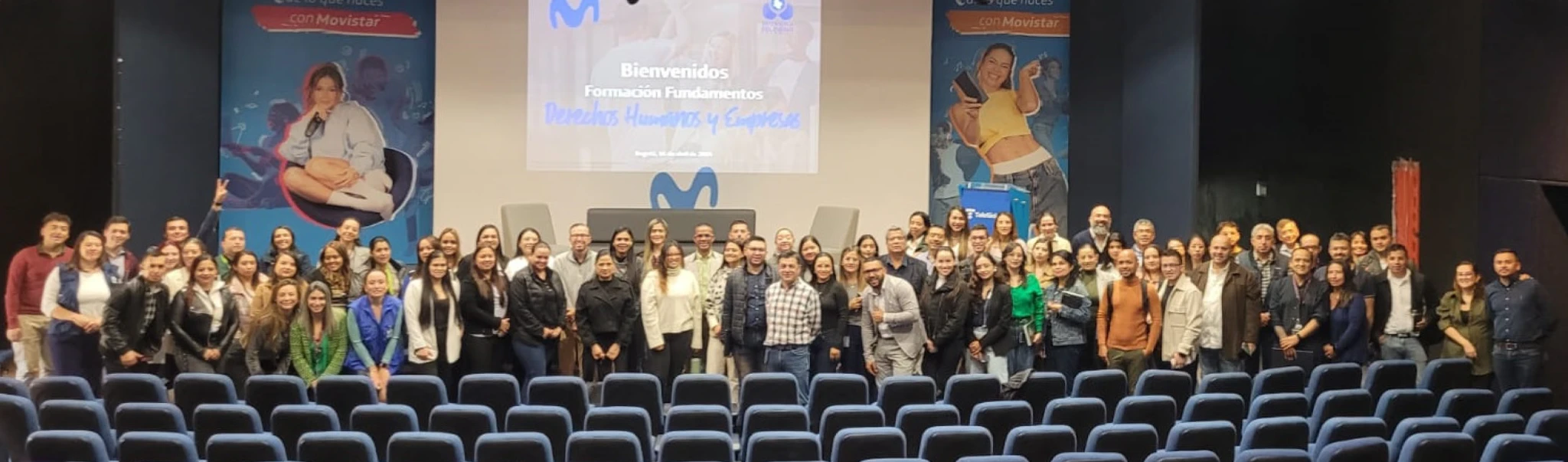
In 2024, together with the Ombudsman’s Office and its National Directorate for the Promotion and Dissemination of Human Rights and the Delegate Ombudsman’s Office for Economic, Social and Cultural Rights, a training course on basic fundamentals of Human Rights and Business was held for employees and suppliers within the framework of the Allies Academy, aimed at the protection, promotion and respect for human rights, peaceful coexistence and a culture of peace. More than 70 people had the opportunity to participate, including employees and allied companies.
Likewise, we continued the promotion and training of the Supply Chain, especially for security personnel. The Company’s current security scheme covers the protection of people, goods and infrastructure and is in charge of the allied companies Seguridad Atlas Ltda., Prosegur S.A. Cía. de Seguridad, and Honor Servicios de Seguridad Ltda.
Likewise, we continued the promotion and training of the Supply Chain, especially for security personnel. The Company’s current security scheme covers the protection of people, goods and infrastructure and is in charge of the allied companies Seguridad Atlas Ltda., Prosegur S.A. Cía. de Seguridad, and Honor Servicios de Seguridad Ltda.
Prosegur S.A. Cía. de Seguridad
The company, as part of its training plan, has established an online course on Human Rights at Prosegur University, with the purpose of recognizing which behaviors may affect human rights and which are the obligations of the State, companies and individuals in each specific case. As of December 2024, coverage for personnel assigned to the Telefónica Movistar Colombia device is at 91%.
Seguridad Atlas Ltda.
The training process of this partner company is carried out in two modalities and as of December 2024, the coverage for the personnel assigned to the Telefónica Movistar Colombia device is 87%:
- Virtual Mode: Through the UniAtlas Virtual Campus, training is provided for the Induction processes: Code of Ethics, No Bribery Policy and Human Rights; Integral Development Journey (Reinduction): Human Rights, Diversity and Inclusion and Virtual Training: Human Rights Course and Diploma in Use of Force with emphasis on International Humanitarian Law.
- Distance mode: Reinduction booklet for the provision of the service for Telefónica Movistar Colombia, which includes the topics of Code of Ethics, No Bribery Policy, Human Rights, Ethics Line, Siplaft.
Honor Servicios de Seguridad Ltda
The allied company has established virtual courses on Human Rights, Gender Equity and Due Diligence, among others. As of December 2024, coverage for the personnel assigned to the Telefónica Movistar Colombia device is 100%.
According to the distribution of the personnel of each of the allied companies, the total percentage of training in Human Rights of the Security personnel assigned to the protection of people, goods and infrastructure of Telefónica Movistar Colombia is 87.5%.